A Mysterious Encounter with the Yoruba Religion
It started with an innocuous visit to a fruit stand in a bustling Havana market. I was chatting with the vendor, an elderly woman with a radiant smile, as I bought mangoes and guavas. Our conversation wandered from fruit to Cuban culture, and somehow, we landed on the topic of Santería. “Soy parte de la religión,” she said matter-of-factly, her voice tinged with pride. She explained her devotion to Yoruba traditions, and her stories ignited my curiosity.
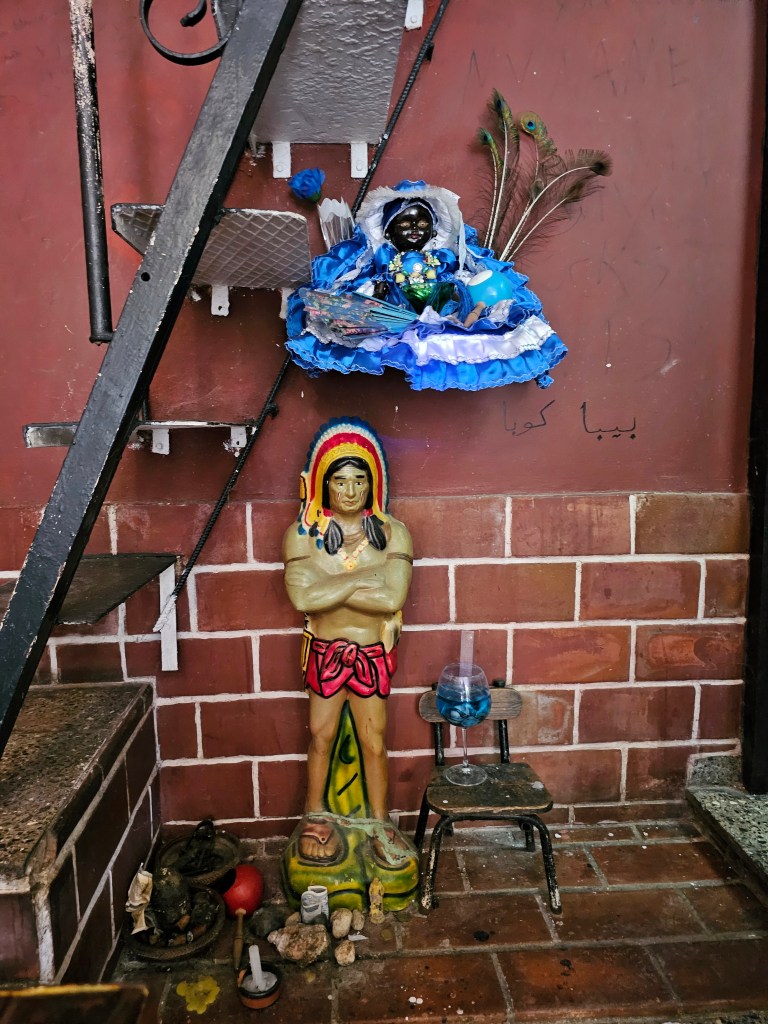
Eager to learn more, I found myself at the Museo de los Orishas (Museum of Orishas) in Havana, a small but fascinating space dedicated to Santería, a religion deeply rooted in Cuban culture. But my journey didn’t stop there. On the woman’s recommendation, I booked a session with a Yoruba priest to have my past, present, and future read.
Walking into the priest’s dimly lit room, I was greeted by the faint scent of incense and an altar adorned with vibrant dolls and offerings. In one corner were two live chickens, awaiting their role in an upcoming ritual. The reading itself was unlike anything I’d ever experience, both intimate and surreal. Though I won’t share the details of what he told me, the atmosphere left me deeply introspective and eager to understand the layers of this enigmatic religion even if on the basis of reading more about it as I am not a religious person but it’s interesting to see what people believe in.
Understanding Santería: A Religion of Resilience and Syncretism
Santería, also known as Regla de Ocha, is a religion born from the fusion of Yoruba spiritual traditions brought to Cuba by enslaved Africans and Roman Catholicism introduced by Spanish colonizers. It’s a system of worship that honors the Orishas, deities representing natural forces and human virtues, while often blending them with Catholic saints.
The religion is centered around rituals, music, dance, and a profound connection to nature and ancestors. Offerings, sacrifices (sometimes including chickens or goats), and divination are central practices, all guided by a babalawo (priest) or santero/a.
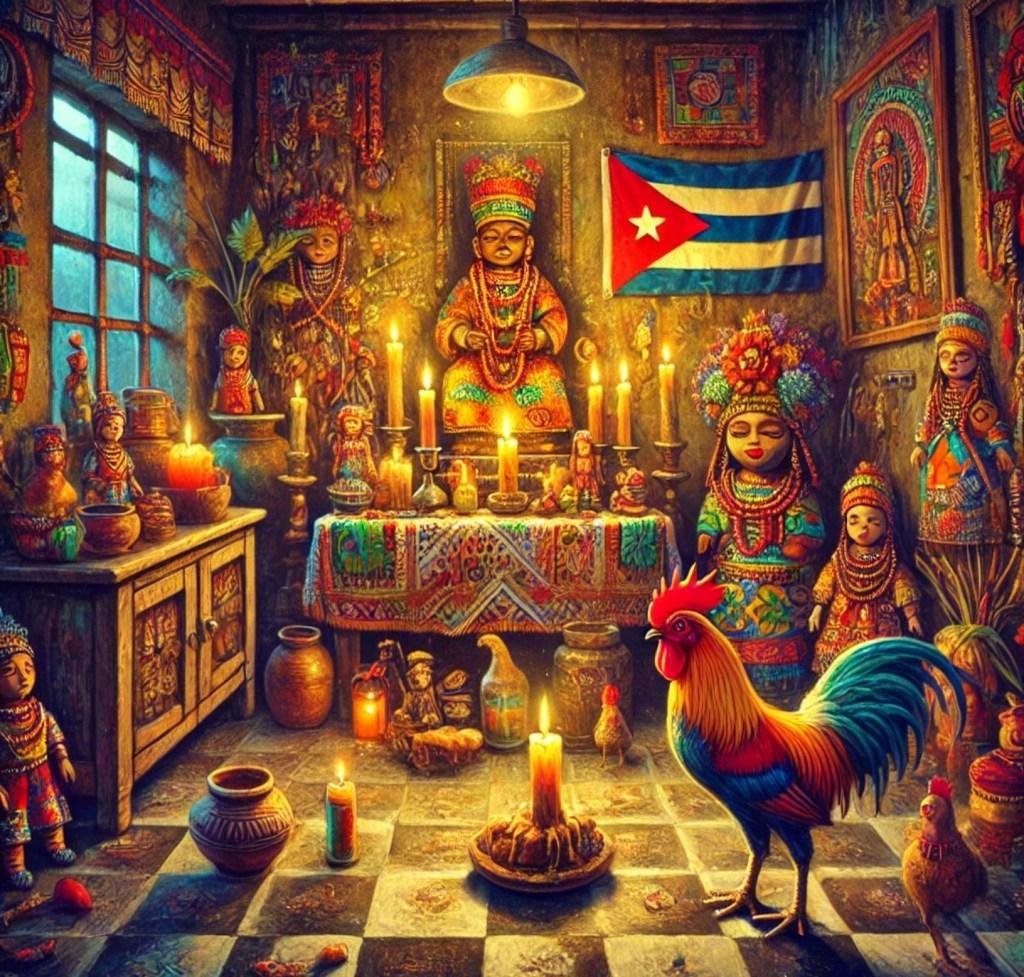
Key Elements of Santería
The Orishas
Each Orisha has a distinct personality, domain, and colors. For instance:
• Eleguá is the trickster and guardian of crossroads.
• Changó symbolizes fire, war, and masculinity.
• Yemayá represents the ocean and motherhood.
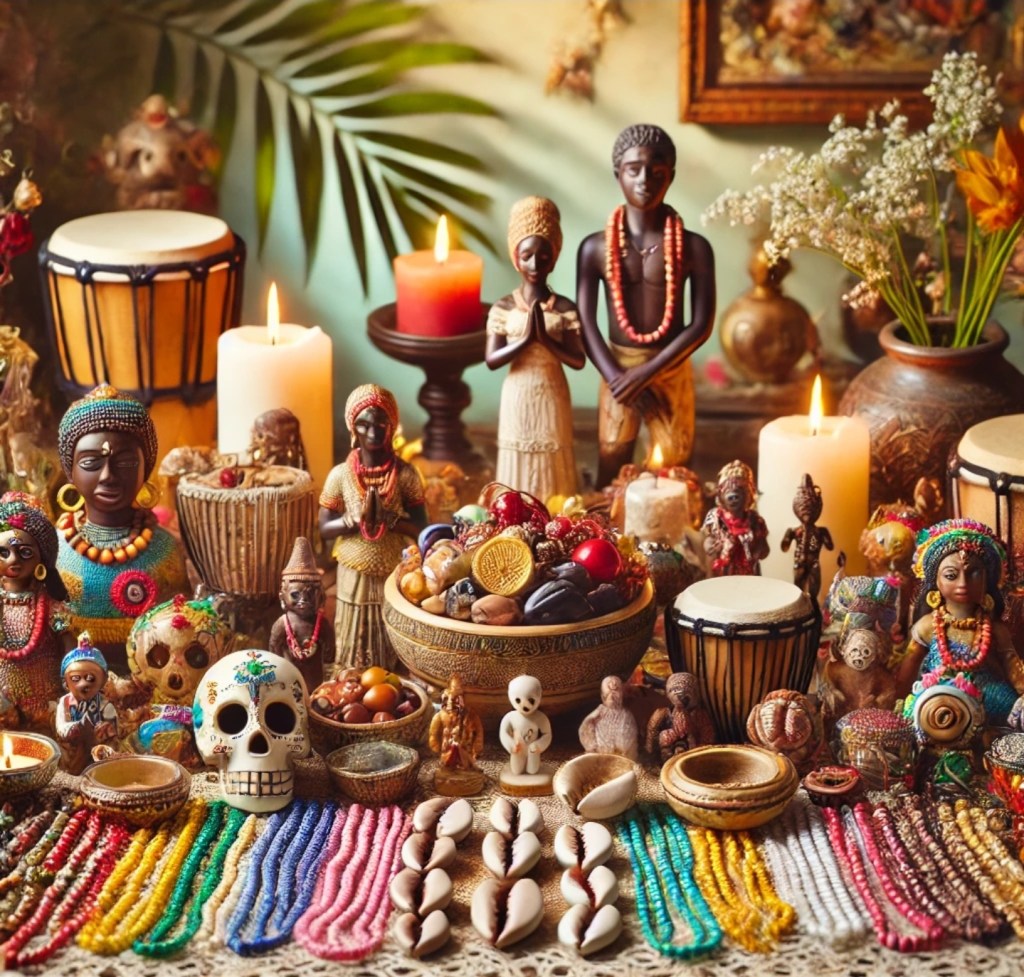
Followers often wear beads or clothing in the colors associated with their patron Orisha.
Divination
Santería places great emphasis on divination, often using cowrie shells (diloggún) or the Ifá system. These rituals guide practitioners in life decisions, offering spiritual insight and protection.
Rituals and Sacrifices
Rituals are vibrant and theatrical, involving drumming, dancing, and chanting. Sacrifices are a way to honor the Orishas and maintain harmony.
Syncretism with Catholicism
During colonial times, enslaved Africans disguised their worship of Orishas by equating them with Catholic saints. This blending remains evident today, with many Santería rituals taking place on Catholic feast days.
A Religion of Struggle and Survival
Santería is more than a belief system, it’s a testament to the resilience of Cuba’s Afro-descendant community. It preserved Yoruba heritage under the harshest conditions of slavery, evolving into a spiritual framework that continues to provide meaning and guidance in the face of modern challenges.
However, practitioners face prejudice, as Santería is often misunderstood or dismissed as superstition. Yet, for those who follow it, it’s a deeply spiritual and empowering way of life, connecting them to their ancestors and a greater cosmic balance.
My Personal Reflection
Santería isn’t just about rituals or divinations—it’s a living, breathing culture that pulses through Cuba’s streets. My journey into its world, beginning with that chance encounter at the fruit stand, was as much about connecting with people as it was about exploring the religion itself. The resilience of the Cuban people, expressed through their devotion to their beliefs and traditions, is something that will stay with me forever.
Santería is not just a relic of the past but a vital part of Cuba’s identity, offering a glimpse into the island’s soul for those willing to listen. If you ever find yourself wandering Havana’s streets, I encourage you to ask questions, visit the museums, and maybe even seek a reading. You might just walk away with a deeper appreciation for Cuba and its extraordinary people.
 The Nomadic Vision
Leave a comment