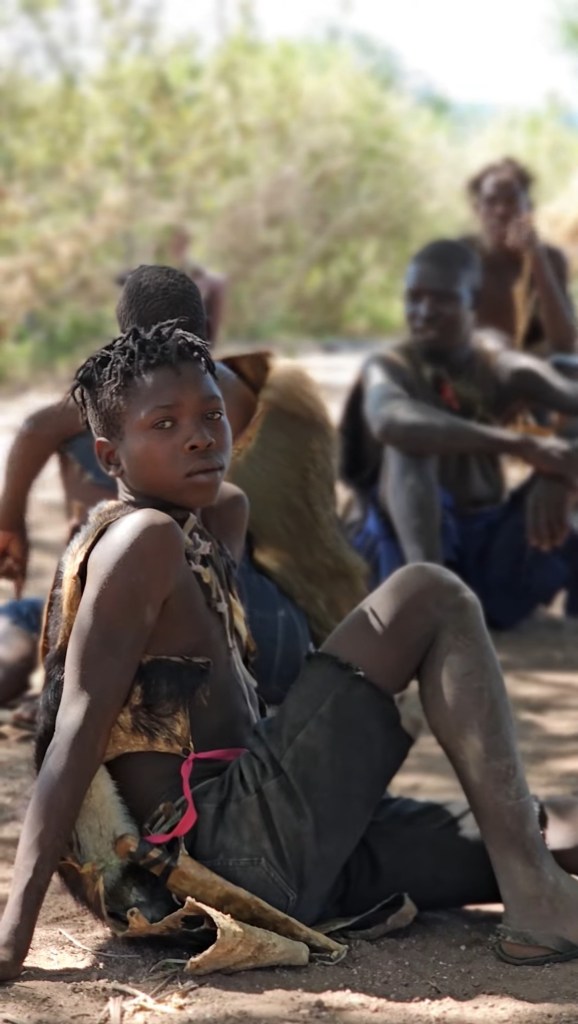
The Hadzabe tribe, one of the last hunter-gatherer communities in the world, resides near Lake Eyasi in Tanzania.
With a history spanning tens of thousands of years, they represent a way of life that predates agriculture and modern civilization. Living in small, semi-nomadic groups, the Hadzabe rely entirely on the land for sustenance. Hunting game with handcrafted bows and arrows and foraging for wild fruits, roots, and honey.
Their customs are as raw and unfiltered as their existence: there are no permanent dwellings, no farming, and no modern possessions apart from a few borrowed items like metal-tipped arrows. What they own fits in the palm of their hand. A stark contrast to our cluttered lives.
The Hunt: A Morning in Another World
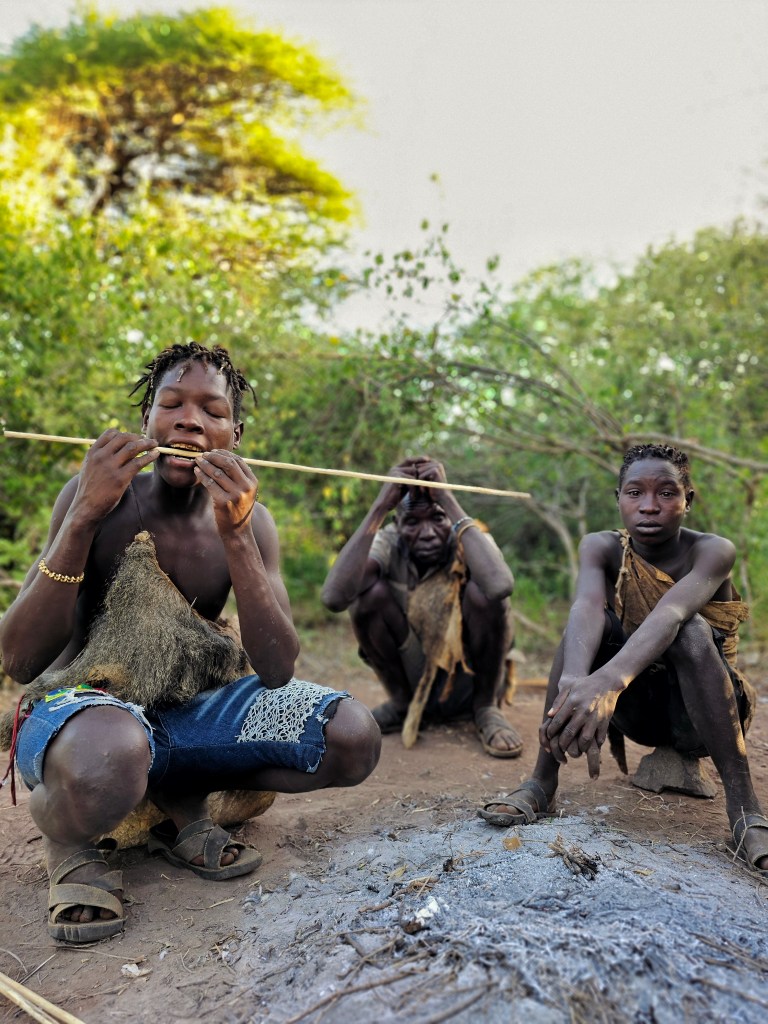
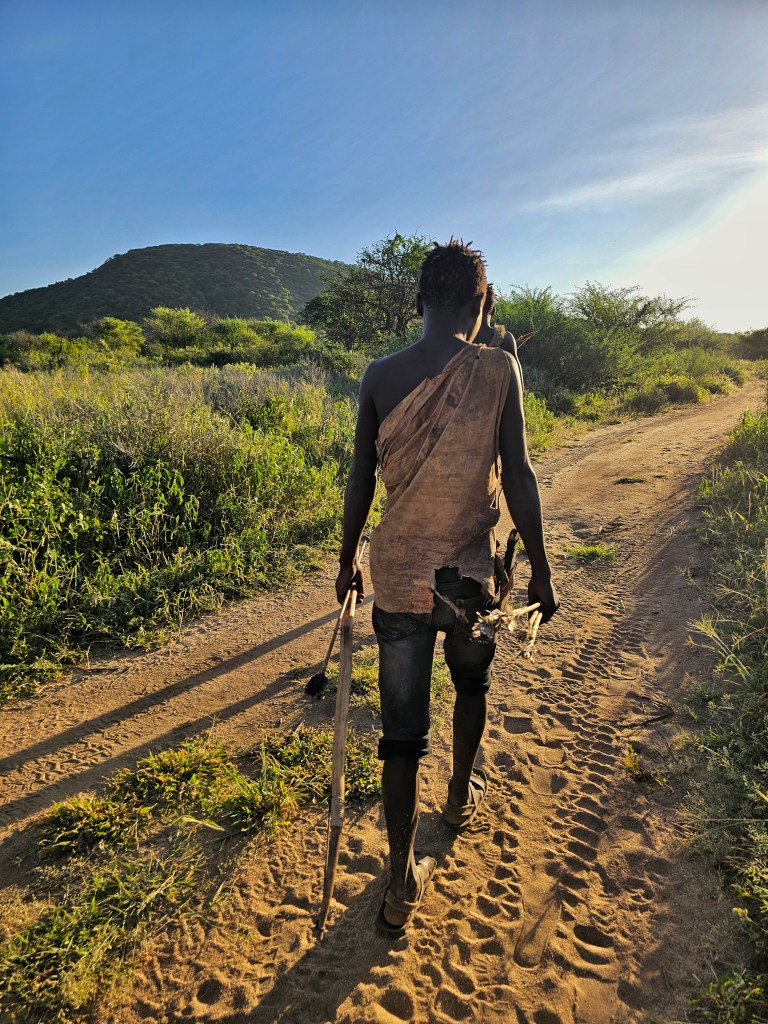
The morning air was crisp as we set off with two Hadzabe hunters, their bows slung effortlessly over their shoulders. They scanned the bushes and trees for movement.
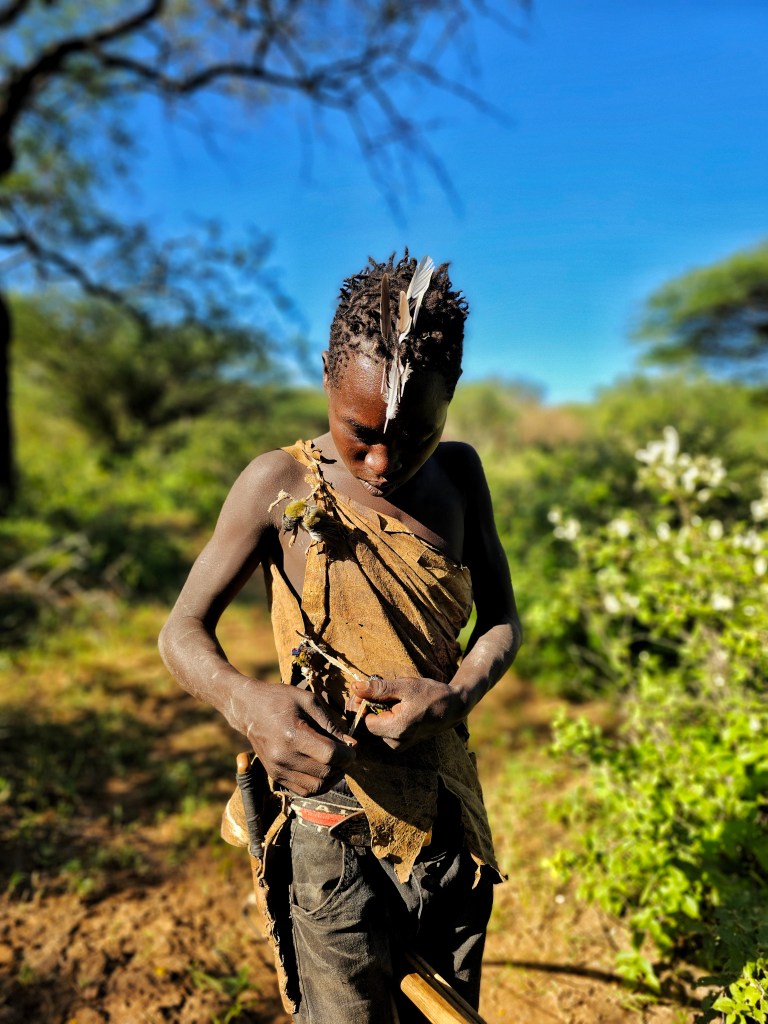
They moved with silent precision, every step purposeful. Within minutes, the first kill, a bird. The hunter grasped the small, lifeless bird and, in one quick motion, used his teeth to snap its neck. I winced, not just at the action but at the efficiency of it. There was no waste, no hesitation. For them, this was life.
The second and third kills came soon after. Tiny birds, no larger than my hand. As the hunters handed them to me, I felt the warmth of their bodies still lingering.
I was acutely aware of how detached my own existence had become from the food I eat. There, holding these birds, I realized how sanitized and removed modern life is.
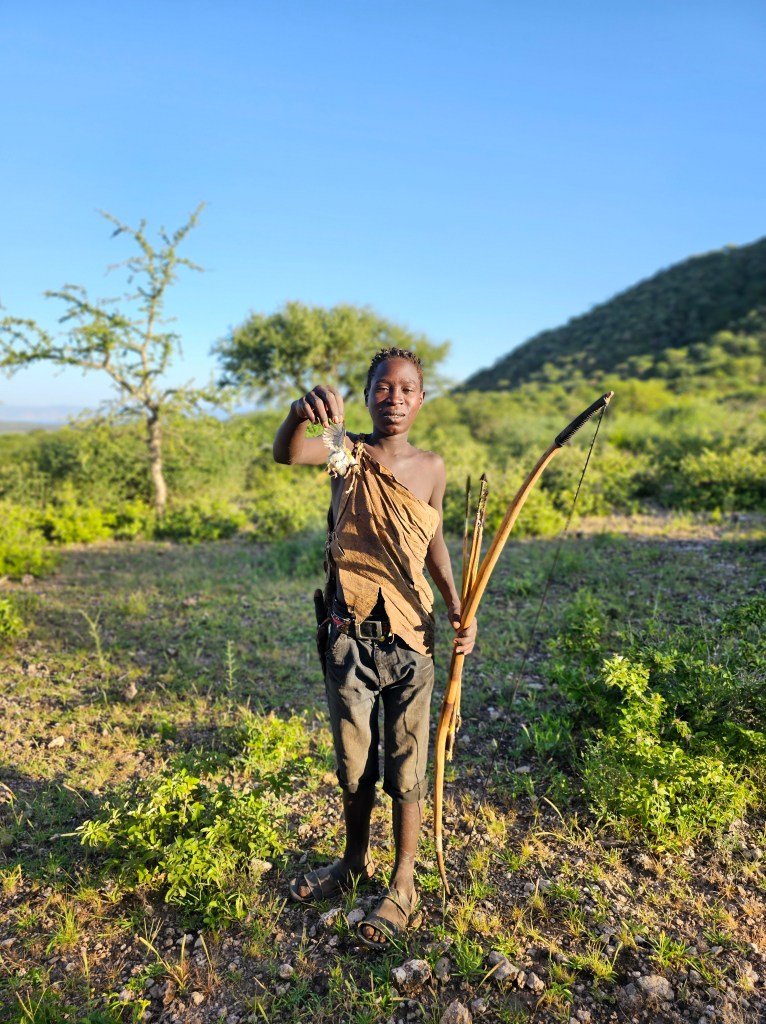
I tried using their bow and arrow, harsh would be an understatement. We laughed together each time I failed.
The gap between their world and mine felt vast.
A Settlement Without Walls
The Hadzabe live with a lightness that borders on the unfathomable. Their “home” was a scattering of makeshift huts woven from twigs and grasses. There were no doors, no boundaries.
What struck me most was not what they had, but what they didn’t. No piles of clothes, no furniture, no tools beyond what was necessary for hunting and cooking. It made me wonder, how much of what I ‘own’ actually owns me?
I felt an unsettling mix of envy and pity. How could they be so free yet so vulnerable? In their simplicity, there was a profound resilience, but also a fragility that made me wonder how much longer this way of life could survive in the face of encroaching modernization.
Reflections: What Do We Really Need?
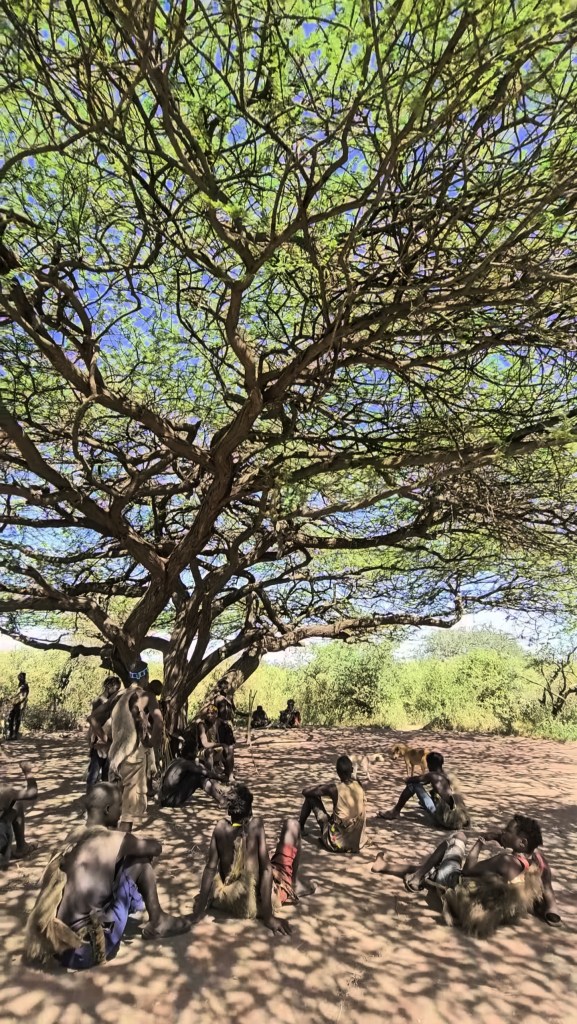
Being among the Hadzabe, I couldn’t help but wonder: in our pursuit of progress, what have we gained and lost?
Their world seemed alien and harsh, but it is also pure. Yet it is ours that feels disconnected, numb to the pulse of nature. What does progress mean if it distances us from the very world that sustains us?
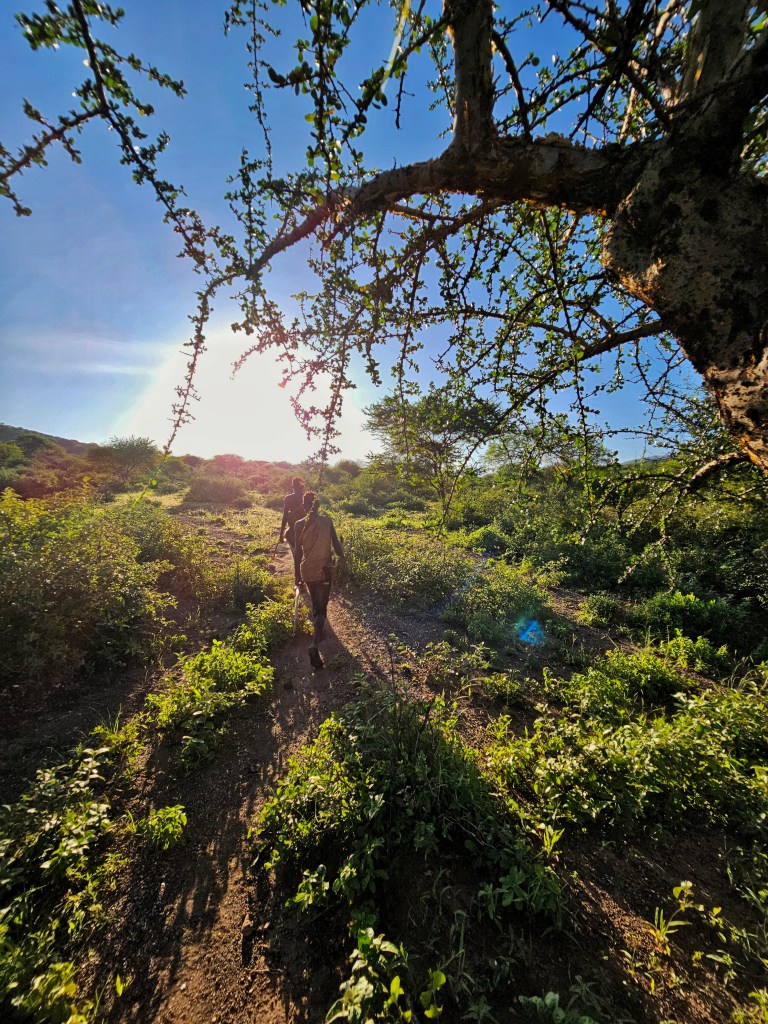
The snapping of the bird’s neck haunted me for days. Not because it was cruel. On the contrary, it was a reminder of the cost of survival. Everything I consume has a price, but it’s often paid far away, by invisible hands and silent animals I never see.
Yet, their life is not one I would romanticize. It’s a life of constant struggle, where survival hinges on whether the hunt is successful or the rains come.
What stayed with me most was the contrast between their lives and ours. We carry the weight of possessions, ambitions, and anxieties. They carry nothing but the tools for survival and the stories of their ancestors.
Hadzabe Religion
The Hadzabe do not have a structured religion, no temples or rituals. They believe in a creator figure known as Haine.
There is no priest, no sermon. Their ‘prayers’ are in the act of hunting, the gathering of honey, the telling of stories under the stars. They believe in the spirits of their ancestors, who watch over them and guide them, but even this belief feels light.
The Language of the Land
The Hadzabe speak a language that feels as ancient as their way of life, a click-based tongue known as Hadzane. Hearing it for the first time was mesmerizing. Unlike most languages, Hadzane is unconnected to any major linguistic families, a living relic of humanity’s distant past.
They have no written form of communication; everything is oral, passed down from one generation to the next.
Final thought
Visiting the Hadzabe was more than an adventure. Their way of life, both shocking and inspiring, forces us to confront our own values.
The Hadzabe may not survive the relentless march of time and progress. But for a fleeting moment, they allowed me to step into a life untouched by modernity and feel, however briefly, what it means to live in harmony with the world around us.
 The Nomadic Vision
Leave a comment