The Vibrancy of Arusha Market
Arriving in Arusha, the first stop was the bustling local market, where the energy of the town hits you immediately. Vendors shouted, colours flashed everywhere, and the aroma of spices and fresh produce filled the air. I loved how people were selling everything from handcrafted jewellery to freshly butchered meat, and the exchange was lively yet respectful. This was an authentic slice of life in Tanzania, and the first taste of the culture before the safari adventure began.
Tarangire: A Land of Giants and Serenity
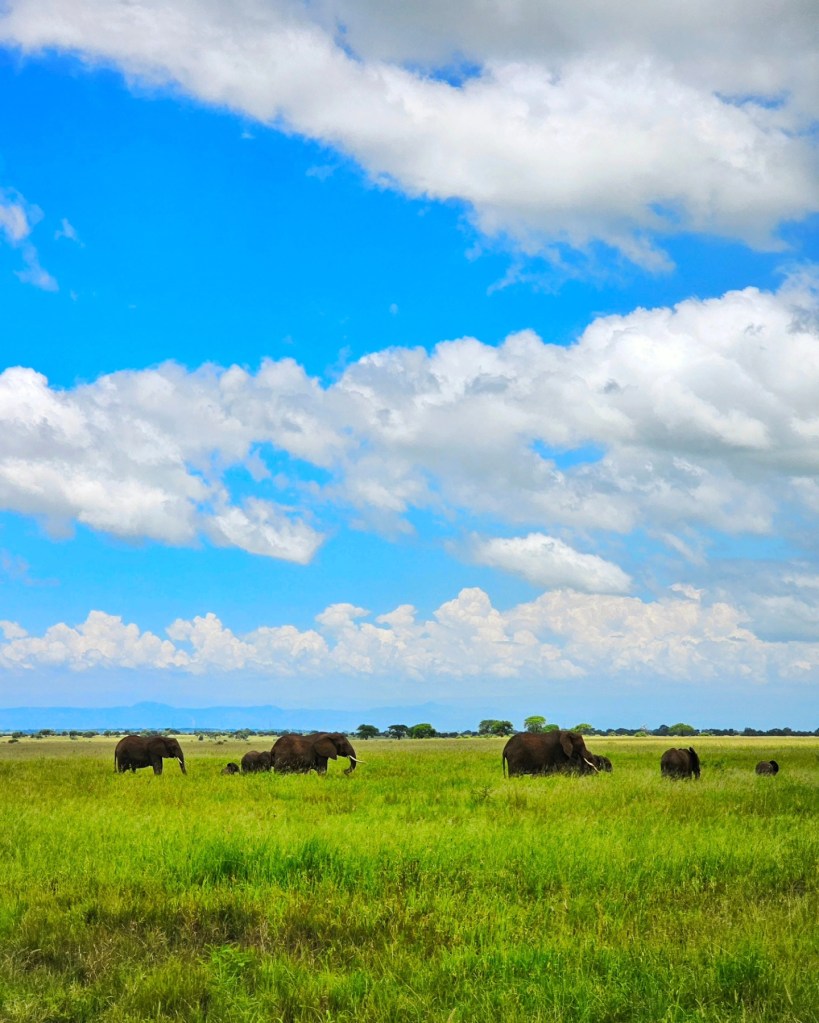
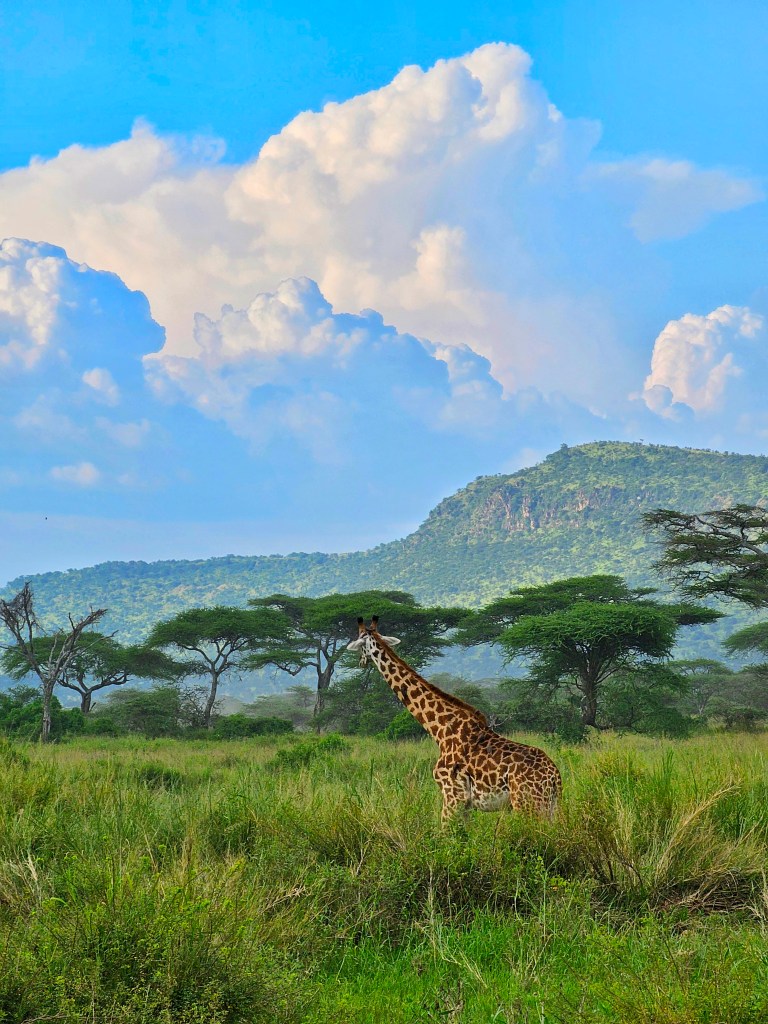
Just outside Arusha, Tarangire National Park is known for its iconic baobab trees and high concentration of elephants. The park is a paradise for wildlife enthusiasts, and it didn’t disappoint. I was immediately struck by the sheer number of elephants—some in herds of more than 30, with calves playfully tripping over their own feet. We also spotted giraffes, towering above the grasses, and a group of blue monkeys swinging through the trees. The day was incredibly peaceful, almost like Tarangire was a secret garden of African wildlife, where nature was left to thrive undisturbed.
Ndutu: Lions, Migration, and Mud
Ndutu, located in the southern part of the Serengeti ecosystem, is famous for its breathtaking views and the Great Migration, which passes through this area in February. That month, I was lucky to witness the herds of wildebeest, zebras, and gazelles slowly making their way across the plains. But what made my time in Ndutu particularly unforgettable was an impromptu situation that happened while we were out driving.
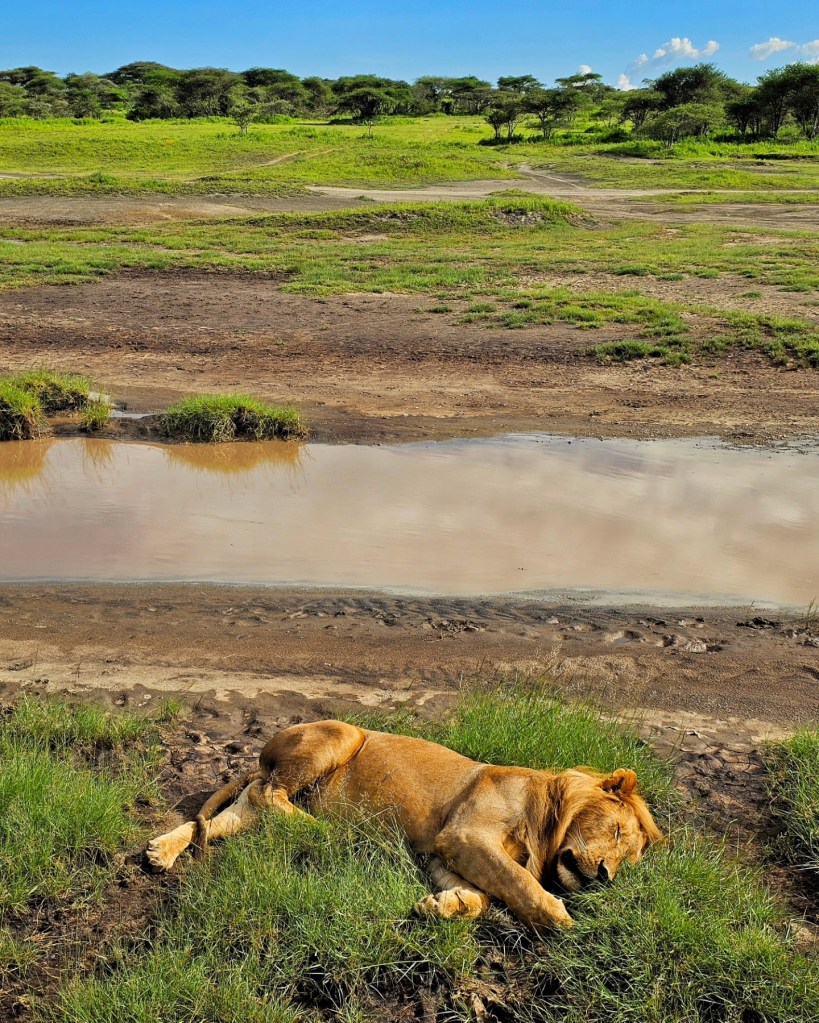
We had stopped to watch a lioness resting under a tree when our guide suddenly pointed out that another safari vehicle had gotten stuck in the mud. As we pulled over to help, we realized that we’d be stepping out of the vehicle. The ground was incredibly soft and muddy, and the other car had sunk deep. It was a little nerve-wracking, especially when I spotted a lion about 50 meters away. The guide noticed my concern and calmly reassured me, “Don’t worry, that lion has a round belly—he’s not hunting today.” It was a surreal experience—standing out in the open, “helping” with the rescue while also being close to wildlife. Or, let’s be honest, I had a few sips of Kilimanjaro beer while waiting.
After some time, the other car was finally freed, and we all continued on our journey.
Later that day, as the sun began to set, I had one of the most beautiful experiences of my entire trip—sitting in the glamping tent, I watched the sky explode into oranges and purples, while birds flew overhead, heading to their roosting spots in the trees above our tents. The atmosphere felt peaceful but primal at the same time, and I felt so deeply connected to the land.
Serengeti: The Ultimate Safari Experience
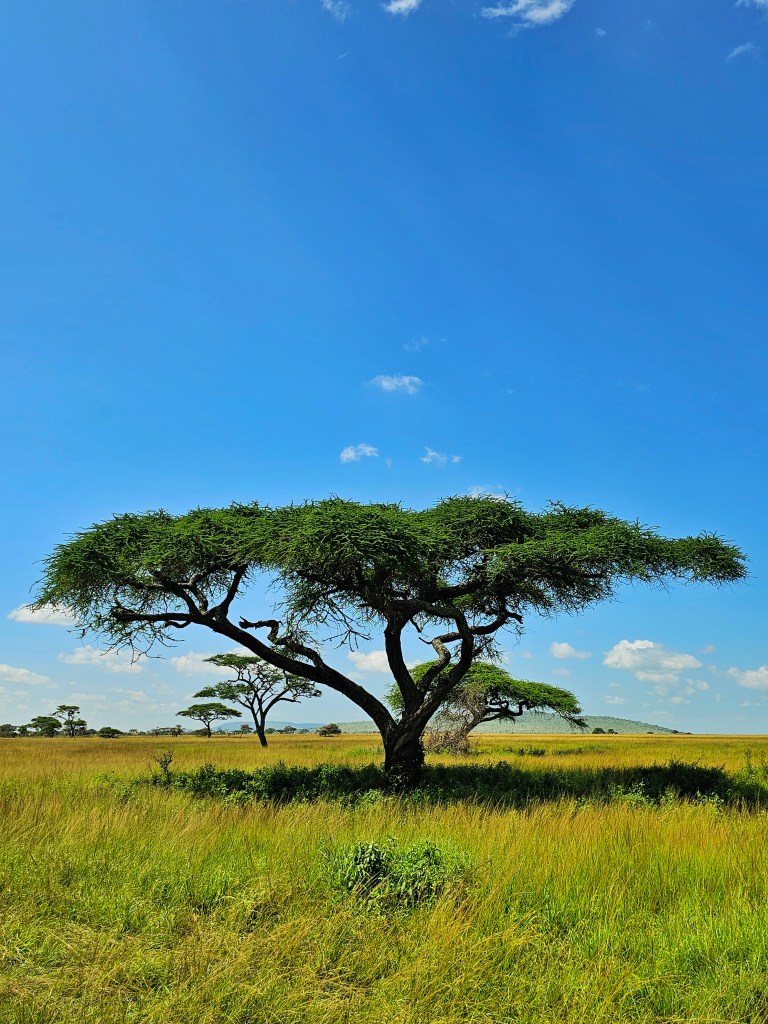
The Serengeti, a name synonymous with safari, is everything you’d expect and more. Vast, wild, and endless, it’s a place that leaves an impression on you long after you leave. On my first day in the Serengeti, I saw the famous leopard descending from a tree after a 30-minute wait. At first, we thought it might stay up there all day, but the leopard made its move as the light changed, and we witnessed it gracefully leaping down from its perch and disappearing into the grasslands. This was raw nature—one of those rare moments that not everyone gets to witness.
Ngorongoro Crater: A World of Wonders at the Edge of the Earth
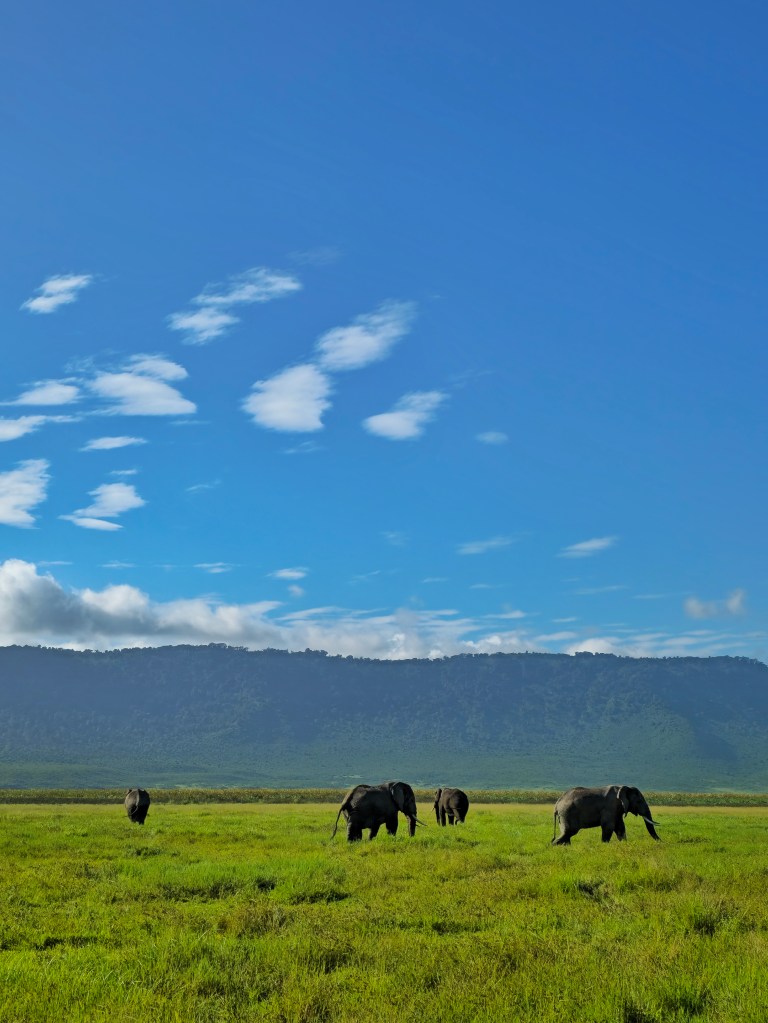
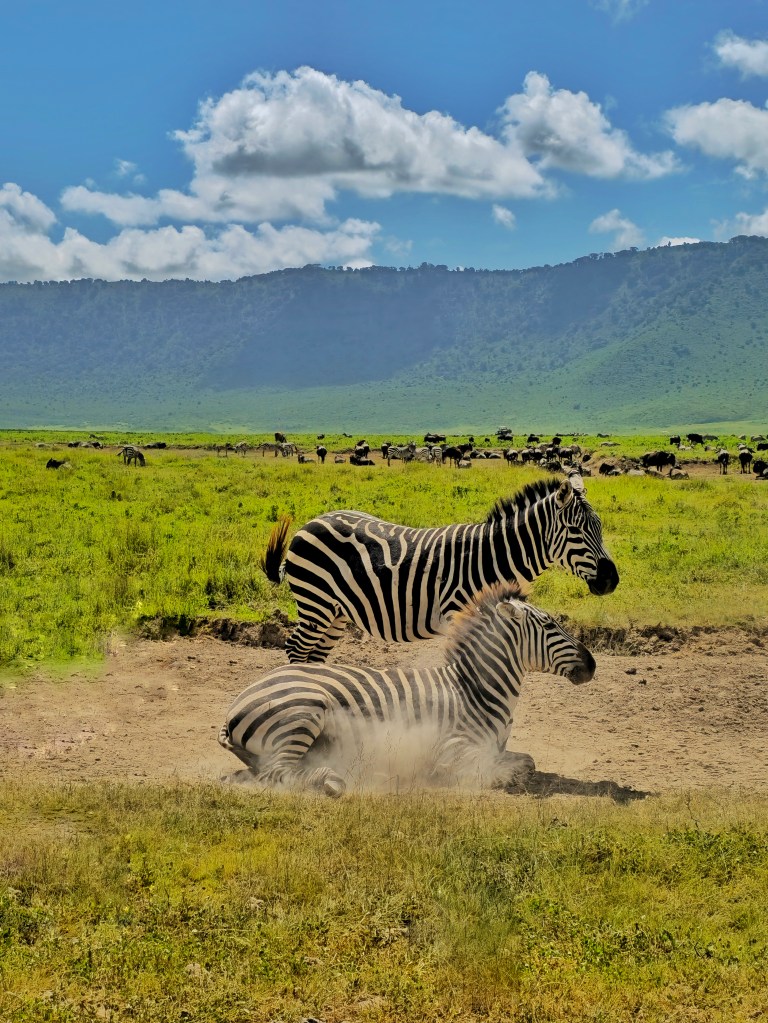
The Ngorongoro Crater was my next stop. As we drove toward the rim, I could already tell this was going to be special. Known as “Africa’s Garden of Eden,” the crater is home to an incredibly diverse array of wildlife. But it was an unexpected encounter with buffaloes that took me by surprise. The herd, including a few of the Big Five, decided that grazing right outside our tents was the perfect idea. We were told to be cautious—don’t disturb them, but just calmly walk into the tent if you feel uncomfortable. That night, I fell asleep listening to the sounds of buffalo munching on grass, an oddly soothing soundtrack.
The next morning, the sun was bright, and a rainbow stretched across the sky.
In the Crater itself, I witnessed a whole host of animals—hippos lounging in the water, lions coming right up to the vehicles as if they were part of the safari, and a rare sighting of a rhino running across the road. The rhinos here are closely monitored by rangers who keep watch 24/7, as there are only about a dozen left in the area. It felt like a privilege to be there, watching them in the wild.

What You Should Know: Visiting Tanzania in February
I visited Tanzania in February, which is an ideal time for a safari, especially if you’re keen on witnessing the Great Migration. This is the time when the herds of wildebeest, gazelles, and zebras are migrating across the plains, and it’s a perfect opportunity to see newborn calves and other wildlife in action. Temperatures during this time can be quite hot, so it’s best to be prepared with lightweight, breathable clothing and plenty of sunscreen.

For those considering a safari at different times of the year, here’s a quick guide:
• June to October: This is the dry season, perfect for game viewing. The vegetation is thinner, and animals gather around water sources, making them easier to spot.
• November to December: This is the start of the short rains, so while the safari experience can still be good, the roads might be muddy, and some areas can be harder to access.
• March to May: The long rainy season, during which many safari parks can be challenging to visit, but if you do, it’s less crowded, and you’ll see lush landscapes and migratory birds.
Tips for a Successful Safari
Before your trip, make sure you’re up-to-date with vaccinations (yellow fever, typhoid, hepatitis A, and malaria). If you’re visiting rural areas or remote parks like the Serengeti, bring malaria tablets and a strong insect repellent.
What to Pack
Clothing: Neutral colors like beige or khaki are best, as they blend in with the environment. Long sleeves and pants help with sun protection and keep you safe from mosquitoes.
Camera & Binoculars: Don’t forget to bring a camera with a zoom lens and a good pair of binoculars to catch wildlife at a distance.
Sun Protection: The African sun can be intense, so bring a wide-brimmed hat and sunscreen.
Water: Stay hydrated with a refillable water bottle—especially in the hotter months.
Choosing a Safari Agency
When booking your safari, choose an agency with experienced, knowledgeable guides. Make sure to read reviews and ensure the company follows sustainable practices. Small group safaris or private tours are often a better choice for a more personalized experience, and they also reduce the environmental impact.
Let’s wrap up
My Tanzanian safari was more than just a trip—it was an experience that touched my soul. The vast landscapes, the wild beauty of the animals, and the rawness of life in the Serengeti, Ngorongoro, and Tarangire left me with a deep sense of respect for this land and its creatures. If you ever have the chance, don’t hesitate to embark on this incredible adventure. Tanzania’s wildlife is waiting, and it’s an experience you’ll never forget.
 The Nomadic Vision
Leave a comment