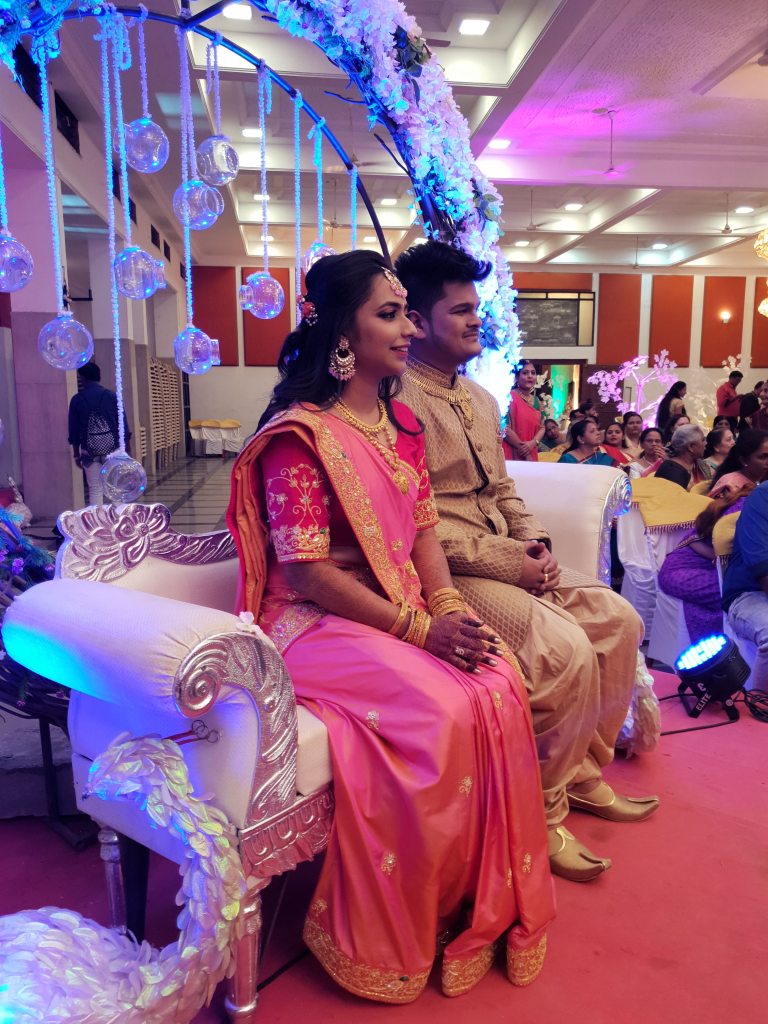
My trip to India in 2019 was made all the more special when I had the honour of attending a wedding that brought together two distinct religious backgrounds; Hinduism and Jainism. The love between the bride, a Hindu girl, and the groom, a Jain man, was evident in every beautiful moment of the celebration.
What made the wedding even more unforgettable was the generosity of the bride’s family, who welcomed me with open arms and dressed me in traditional Indian attire for each event, making me feel like part of the family.
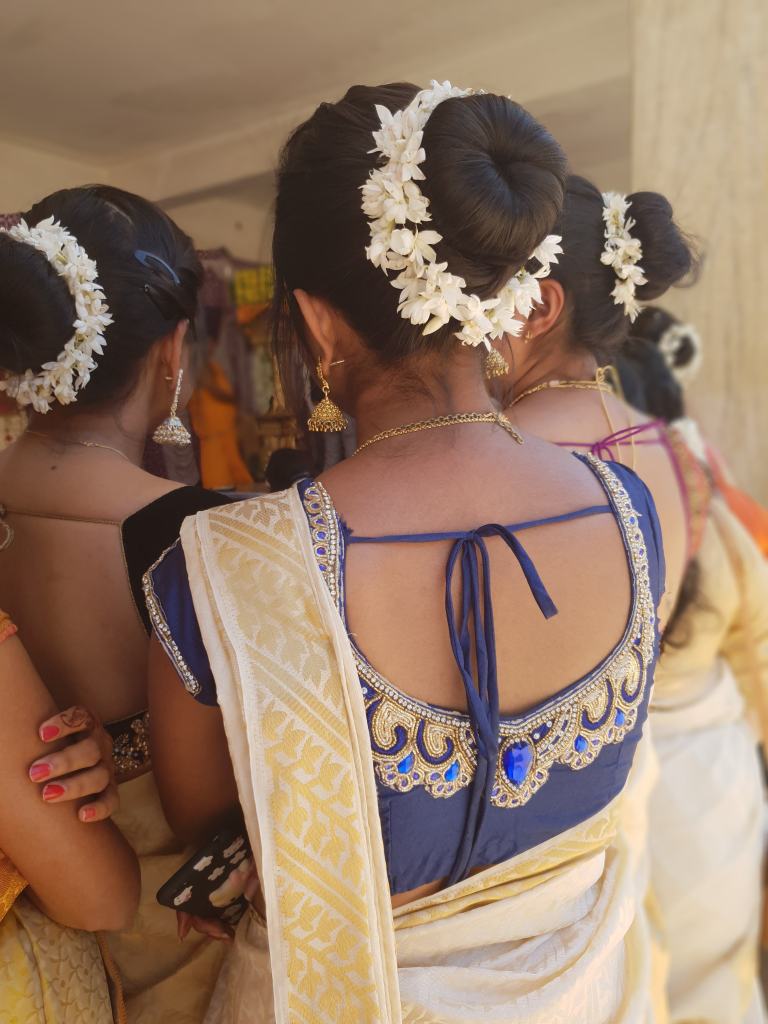
The celebration spanned several days, each one steeped in tradition and bursting with colour, music, and dance.
I was fortunate enough to witness the events from the bracelet ceremony to the henna night, the temple wedding, and the traditional dance celebration. Each occasion was distinct, but they all shared a common thread: love, respect, and the blending of cultures.
Day 1: The Bracelet Ceremony
The wedding celebrations began with the bracelet ceremony, where the bride and groom exchanged beautiful, symbolic gifts. The bride was adorned in stunning jewellery, and her family showered her with blessings.
Day 2: The Henna Night
Next came the henna ceremony, a celebration of beauty, tradition, and the beginning of the bride’s journey to her new life. The intricate henna designs were not only beautiful but also filled with deep meaning, symbolizing the bride’s transition into married life.

Day 3: The Temple Wedding
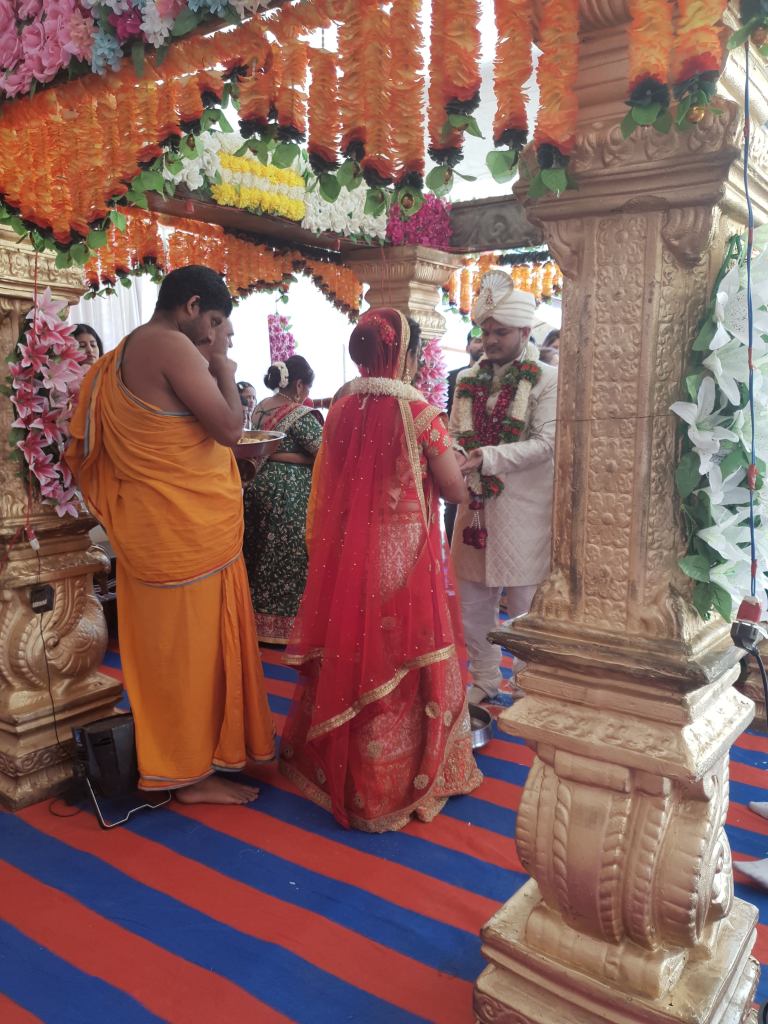
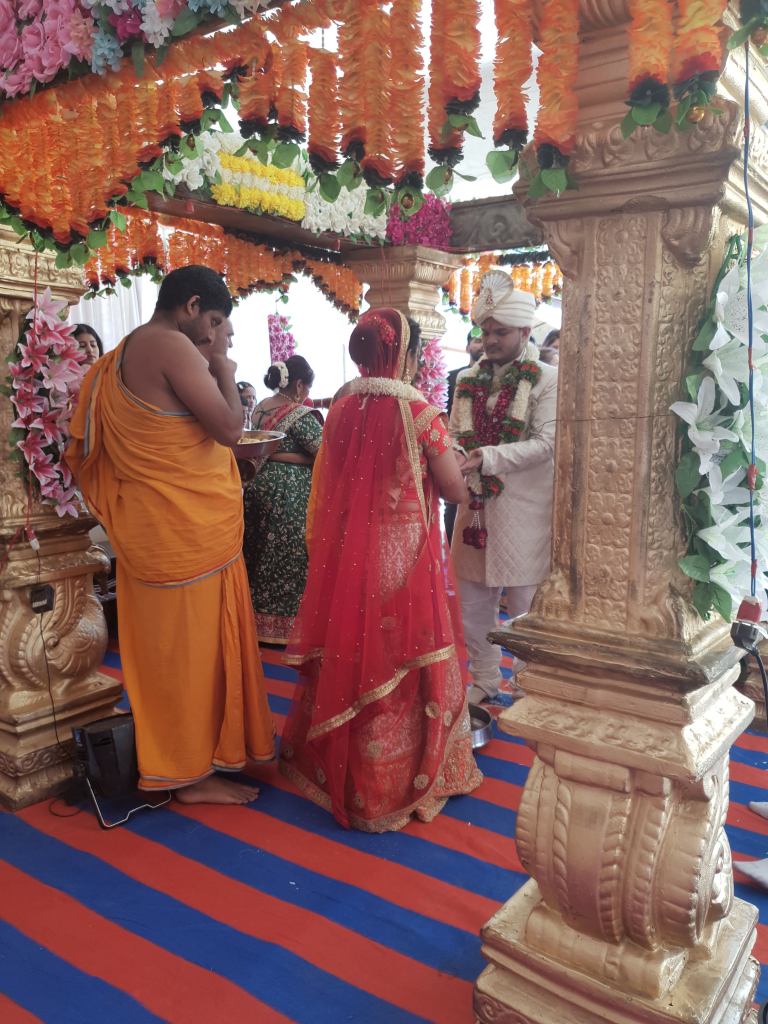
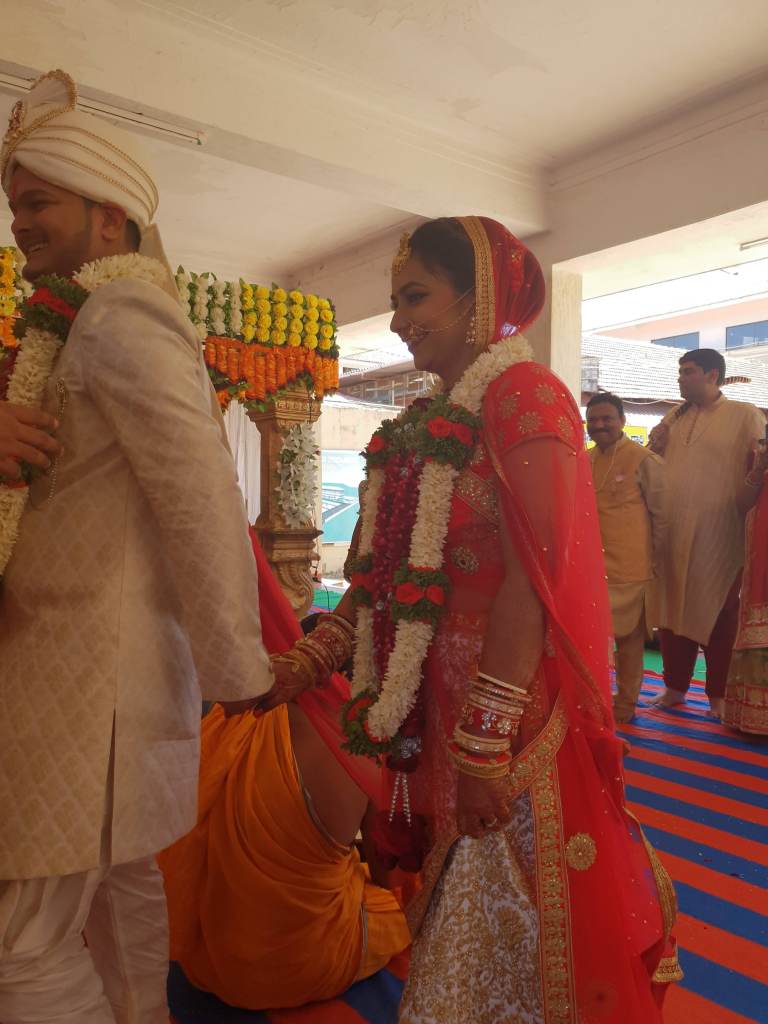
As we arrived at the temple, the first thing that caught my eye was the colourful necklaces made of flowers, which were draped around the bride and groom’s necks. These floral garlands, known as jewels, are a symbol of love, respect, and the bonding of two souls. The bride and groom exchanged these garlands at the entrance, signifying their commitment to each other. Flowers are a common element in Indian weddings, symbolizing purity, beauty, and the blossoming of a new life together.
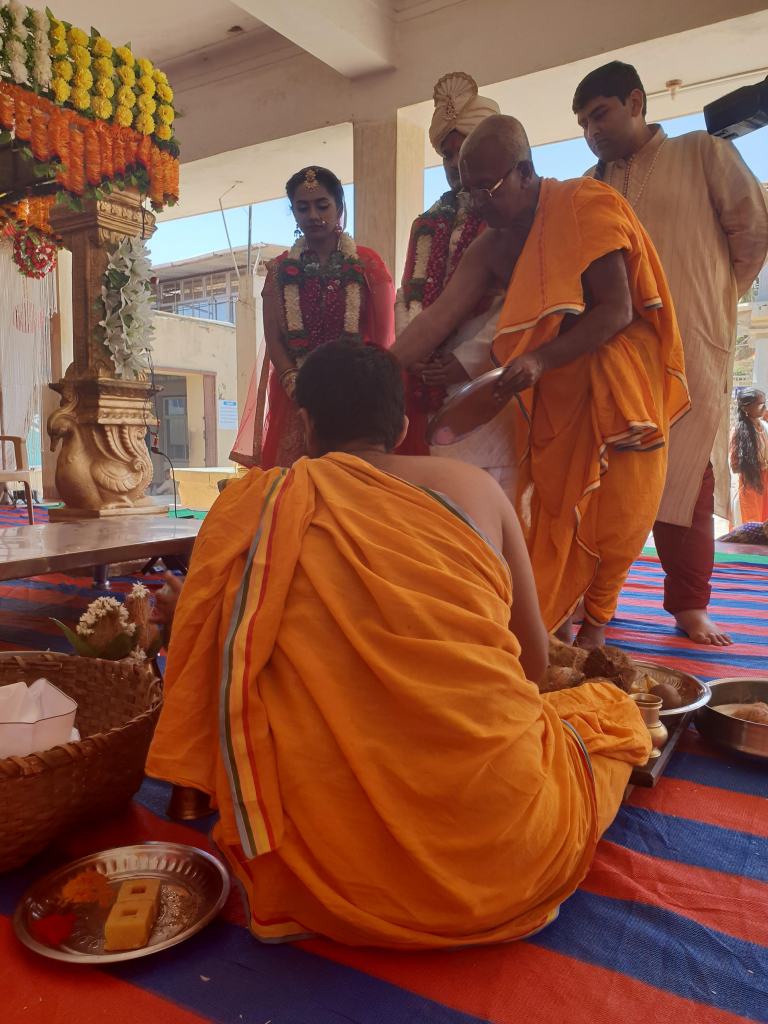
The bride wore a stunning red saree, adorned with gold embroidery. In Hindu weddings, red is considered a sacred and auspicious color, symbolizing prosperity, strength, and fertility. It is said that wearing red on the wedding day brings good luck and blessings to the couple’s future
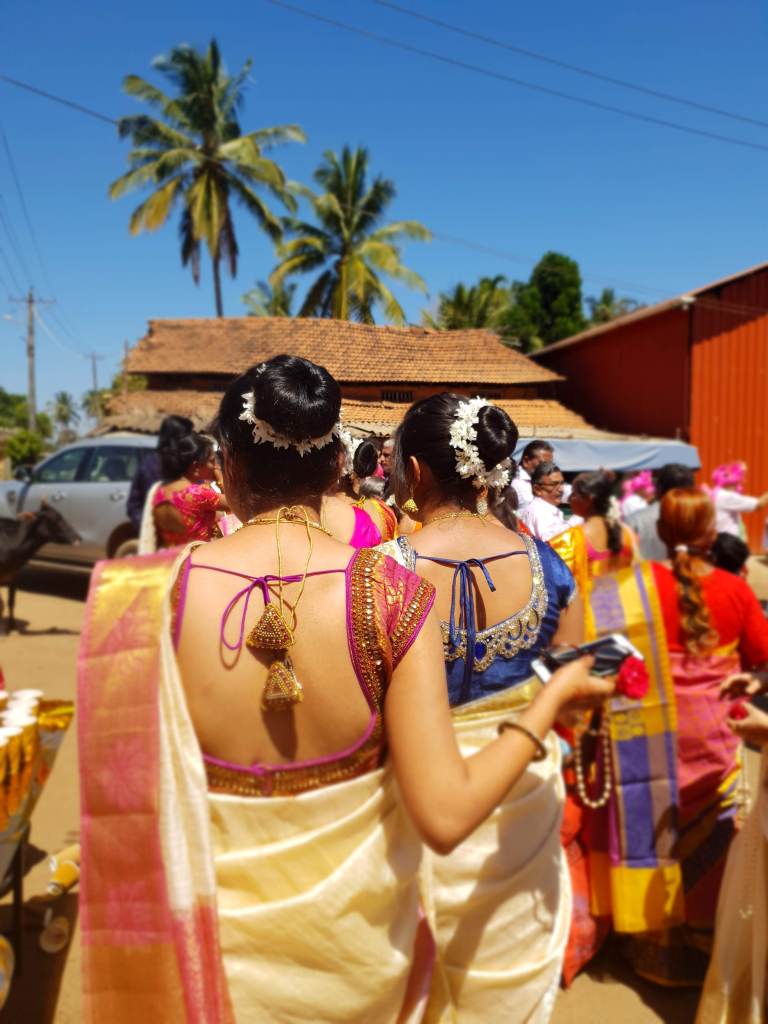
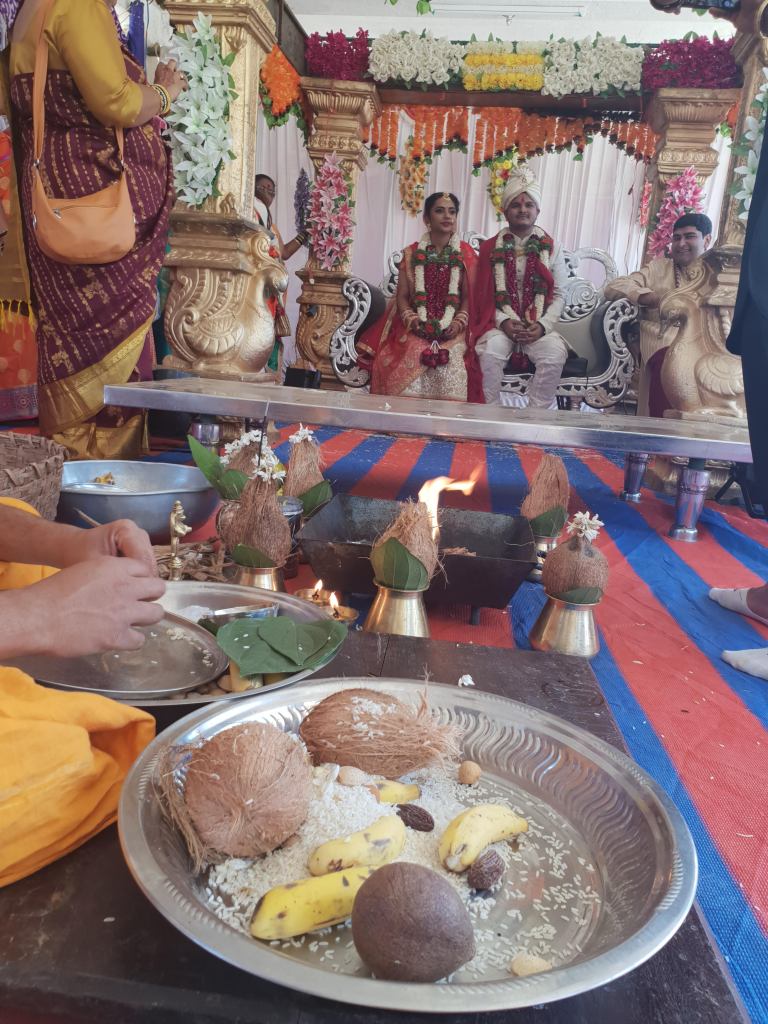
As the ceremony unfolded, incense was lit in various parts of the temple. Candles were lit as well, each representing the light of knowledge, hope, and the dispelling of darkness in the couple’s life together. It was a reminder of the importance of divine presence during the sacred vows.
A deeply symbolic moment came when rice was offered and burned during the ceremony. This ritual is rooted in ancient agricultural practices, where crops such as corn or rice were seen as gifts from the earth and the divine. The burning of the crops represents a sacrifice to the gods, thanking them for the abundance of food and prosperity.
It also symbolizes the couple’s commitment to nourish and sustain each other in their married life, much like the crops that sustain a community. The smoke rising from the burning grains was believed to carry prayers and blessings to the heavens.
One of the most intriguing aspects of the wedding ceremony took place when the priest called for a sheet to be placed between the bride and groom. This moment was charged with anticipation and mystery.
The priest, speaking in a soft murmur, chanted sacred mantras as the couple stood on either side of the sheet. The sheet served as a symbolic barrier, signifying the sacred and private nature of the vows they were about to exchange. It was believed that the couple should not see each other until the right spiritual moment, when they would be spiritually united and ready to face the world together.
When the priest finally whispered the words that marked the perfect time, the sheet was lifted, and for the first time, the bride and groom locked eyes. This moment was significant as it represented their first true gaze of recognition and connection as a married couple.
In some traditions, this is seen as a way of allowing the couple to connect on a spiritual level first before physical attraction comes into play. The priest’s chant served as a guide for when the union was blessed and complete, ensuring the couple was ready to enter the next chapter of their life together.
Day 4: The Dance Ceremony
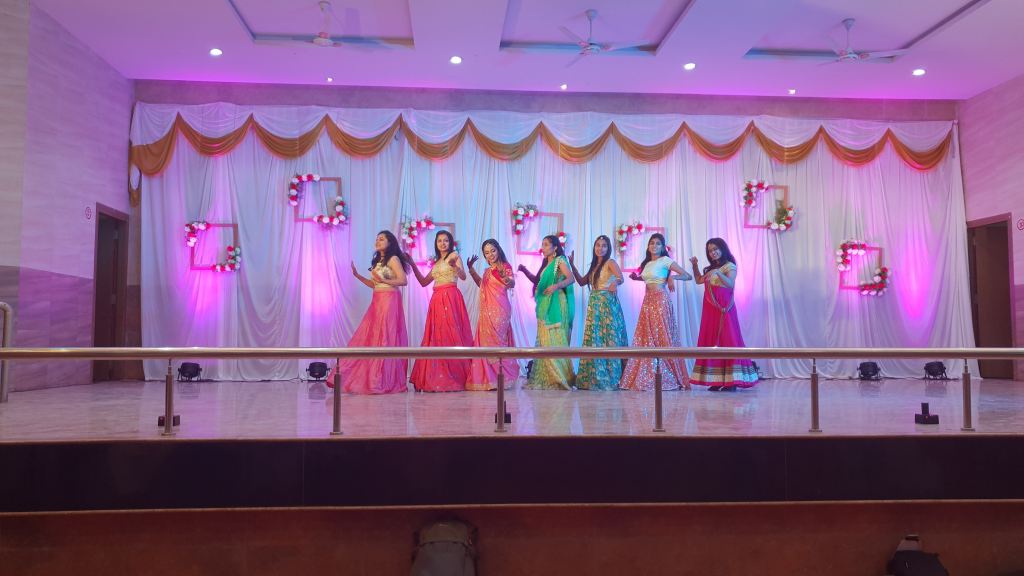
The celebrations culminated in a grand finale, the traditional dance ceremony. The dance ceremony was a stunning display of traditional Indian dances.
 The Nomadic Vision
Leave a comment