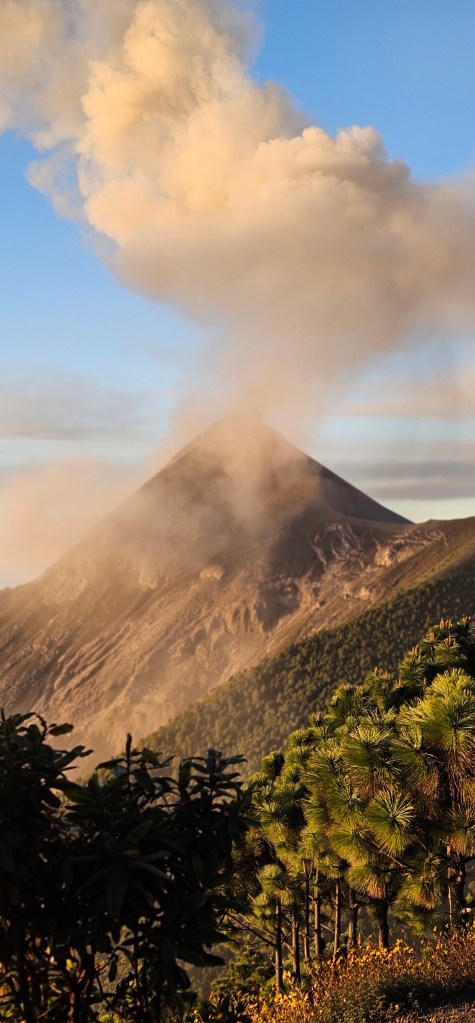
There’s something humbling about witnessing raw nature at its most powerful. I had heard about the breathtaking spectacle of Fuego Volcano eruptions, and when I reached Antigua, Guatemala, it had to be on my itinerary.
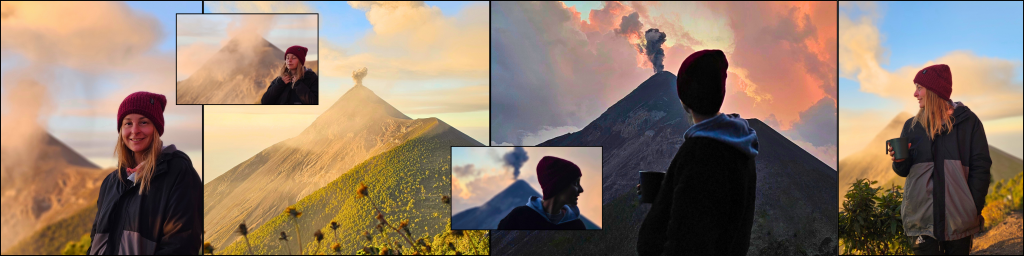
Waiting Out Tropical Storm Sara
My timing, however, wasn’t perfect. Tropical Storm Sara had swept in from the Caribbean coast, bringing cloudy skies and relentless rain. So, for a few days, I wandered through Antigua’s streets, sipping Guatemalan coffee and exploring colourful markets, waiting for the weather to clear.
When the forecast finally showed a break in the storm, it was a good.
The Ascent: From Clouds to Fireworks
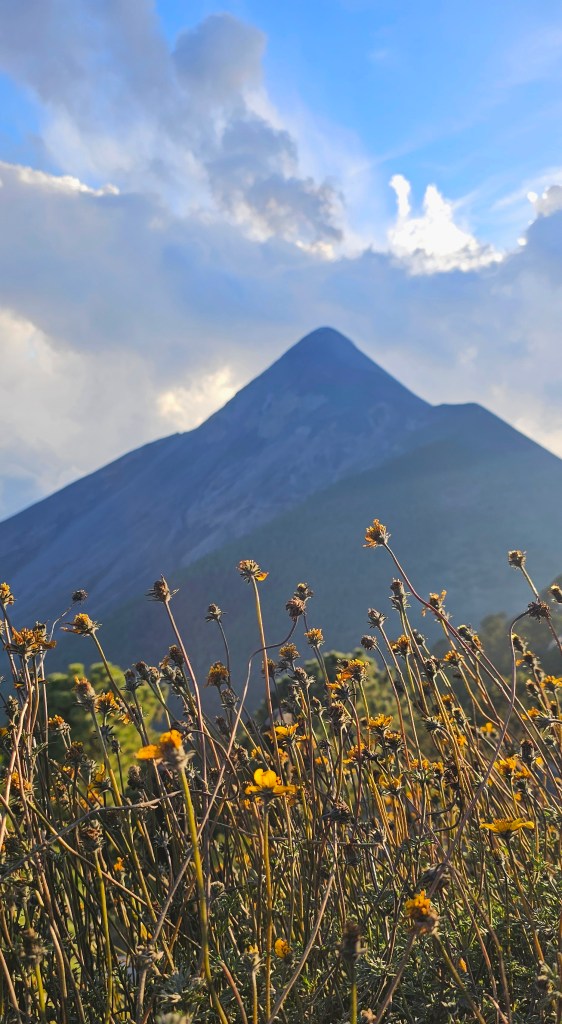
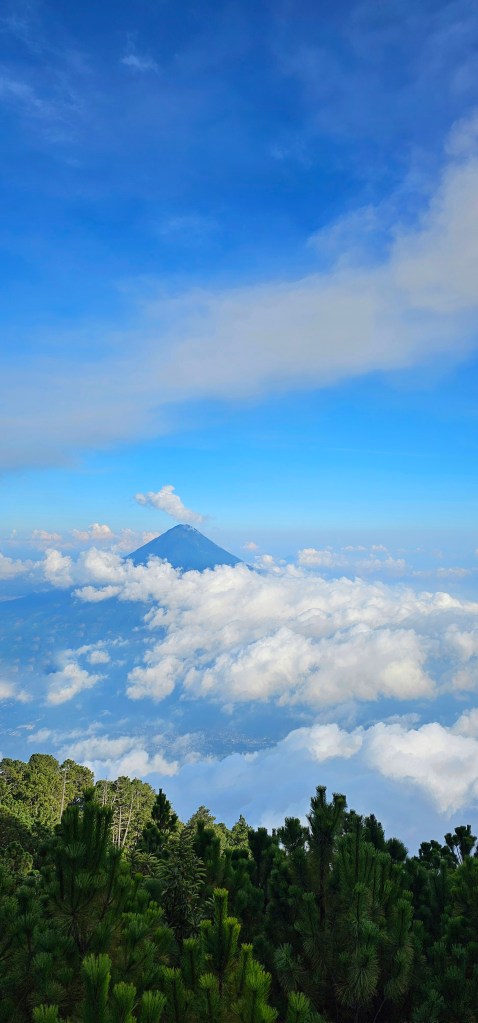
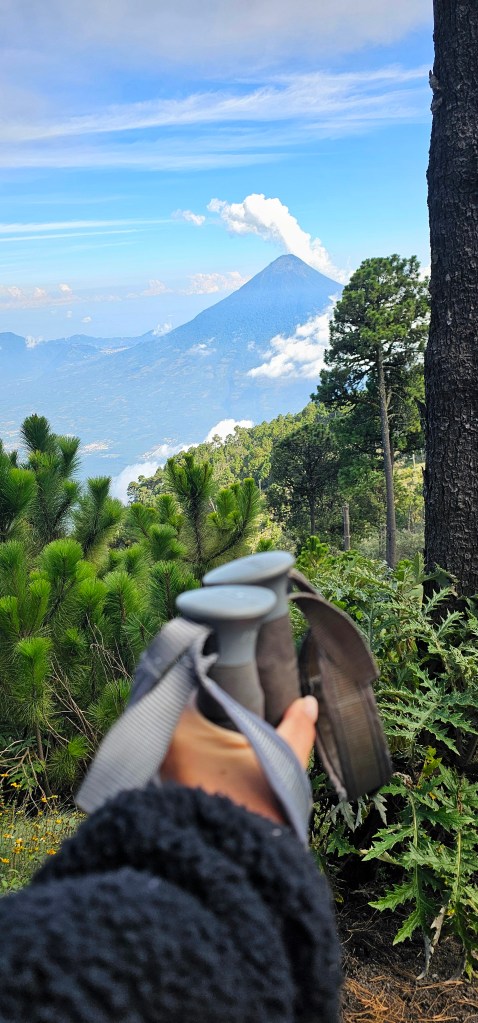
The hike up Acatenango is no joke. i
It’s a steep, challenging climb, especially with the wet trails left behind by Sara’s rains.
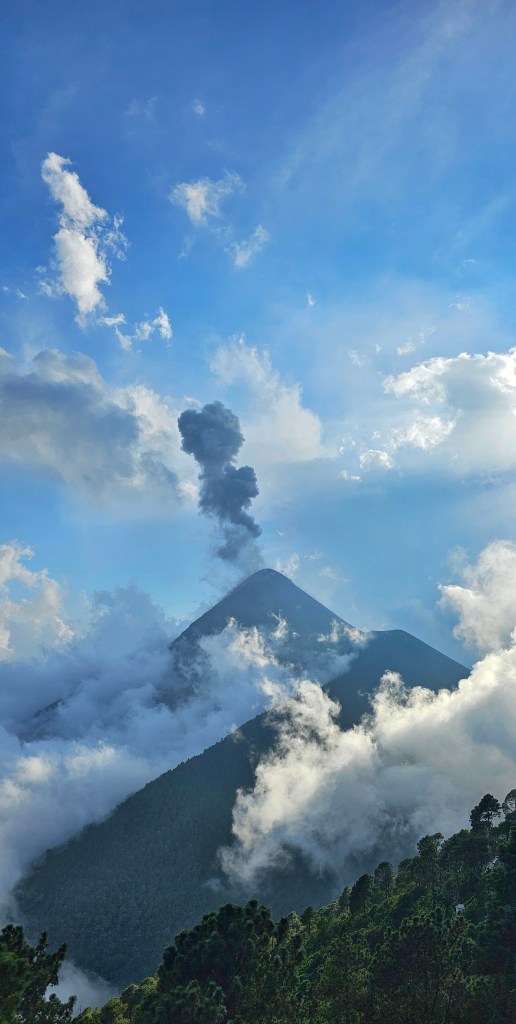
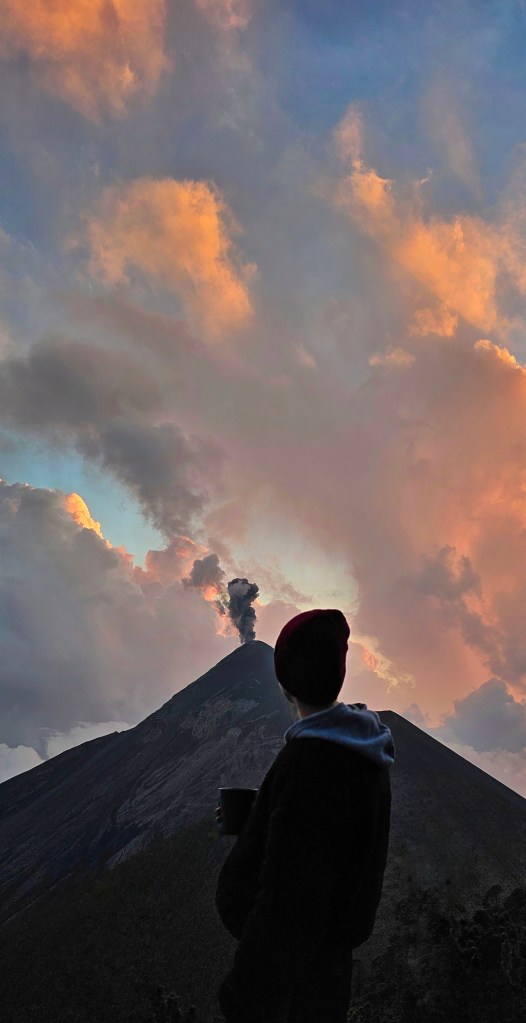
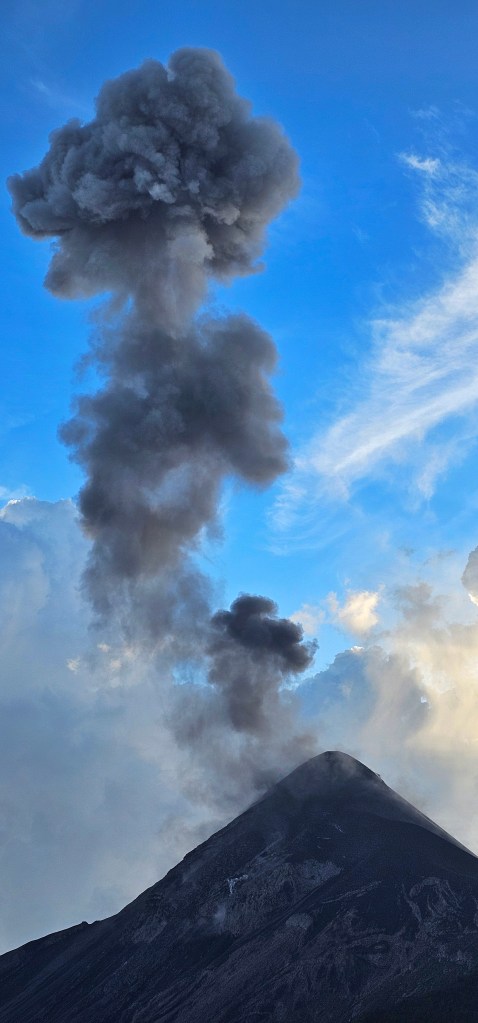
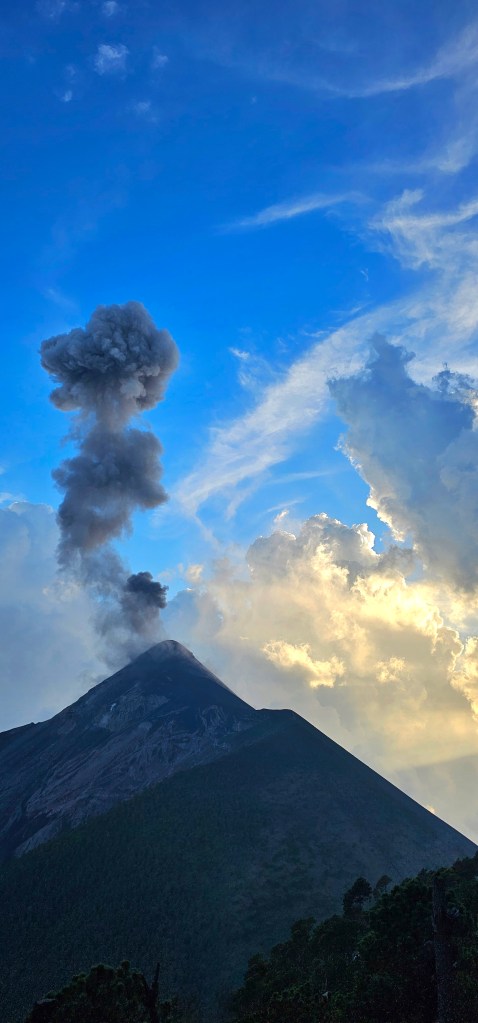
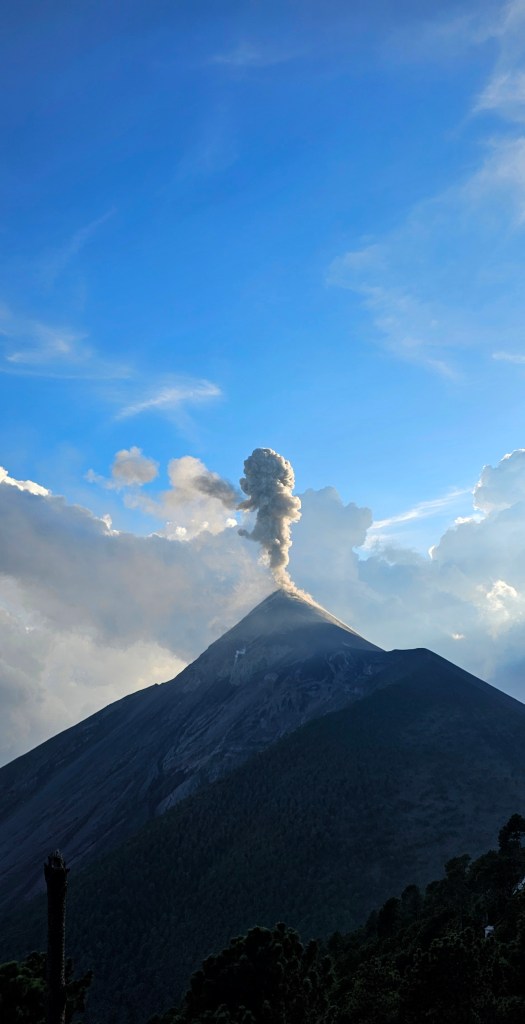
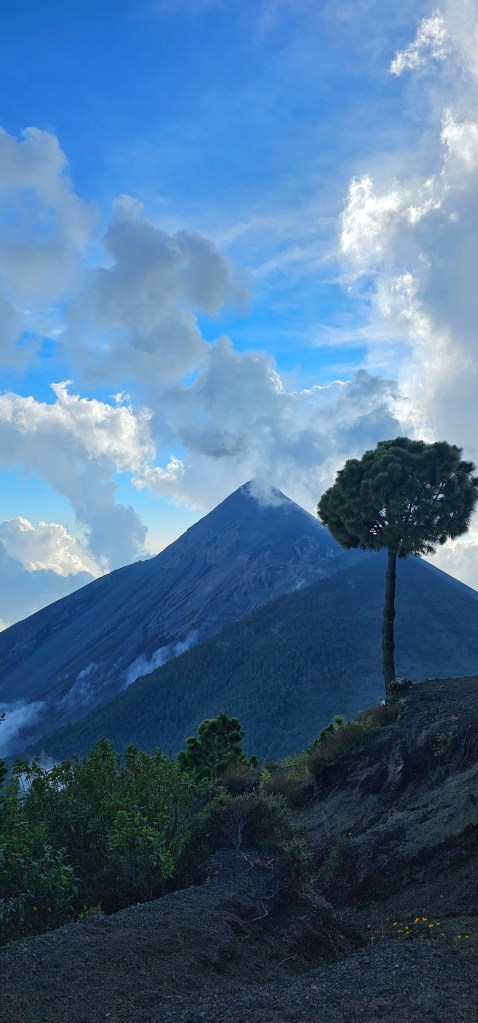
Fuego i
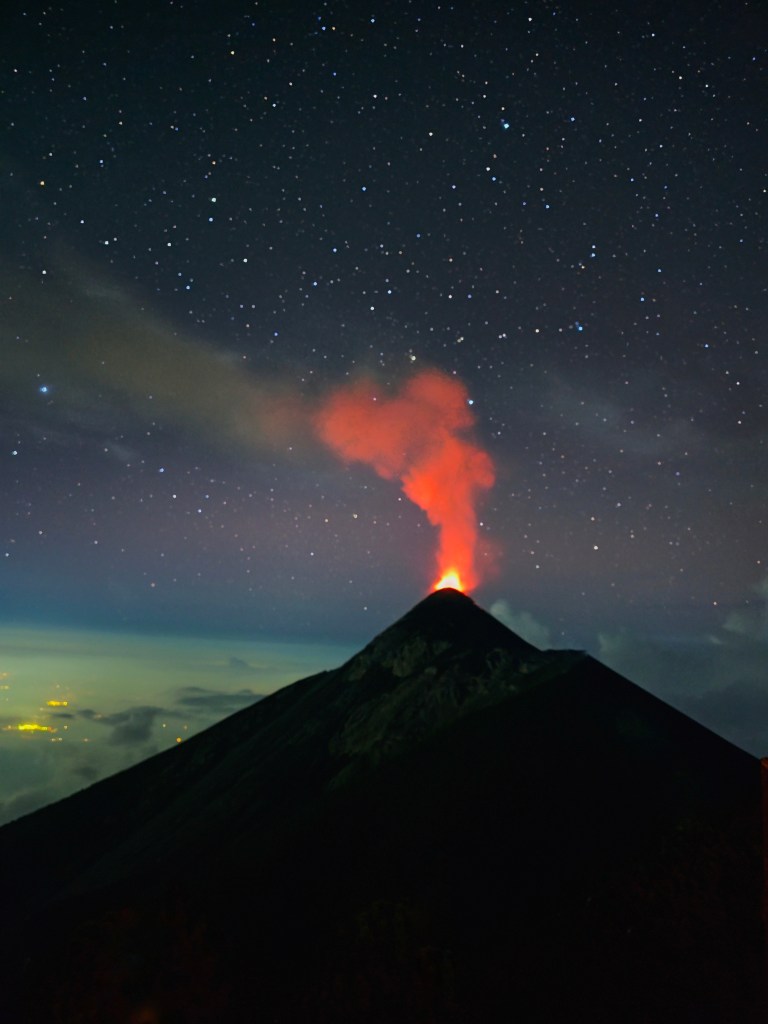
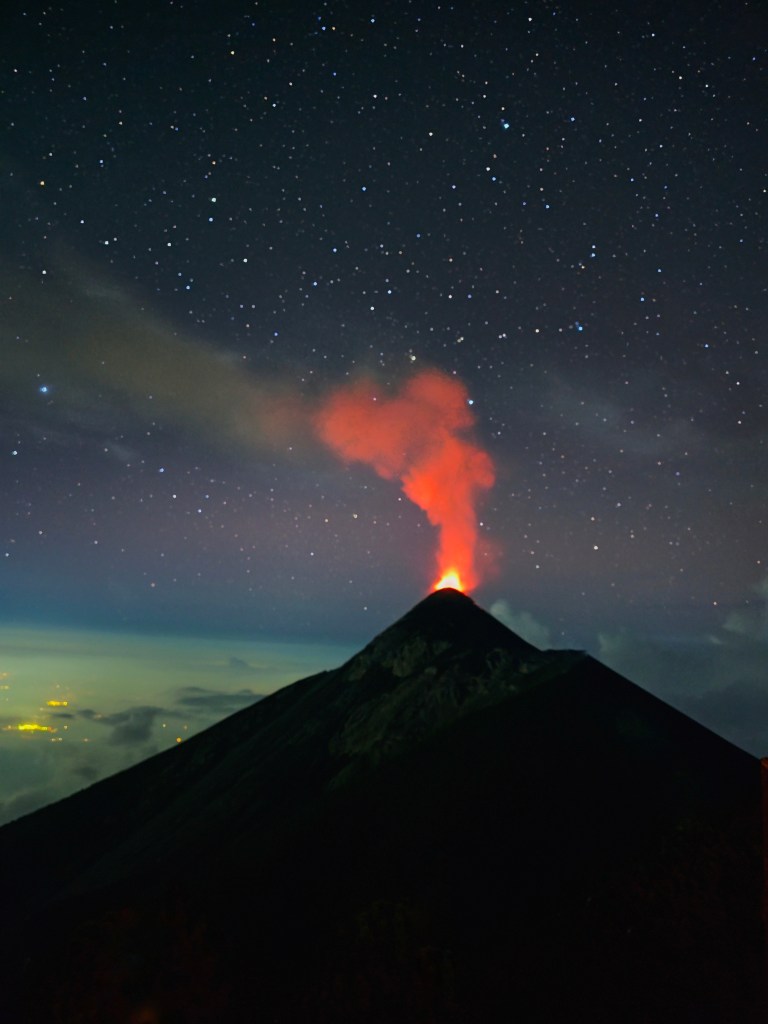
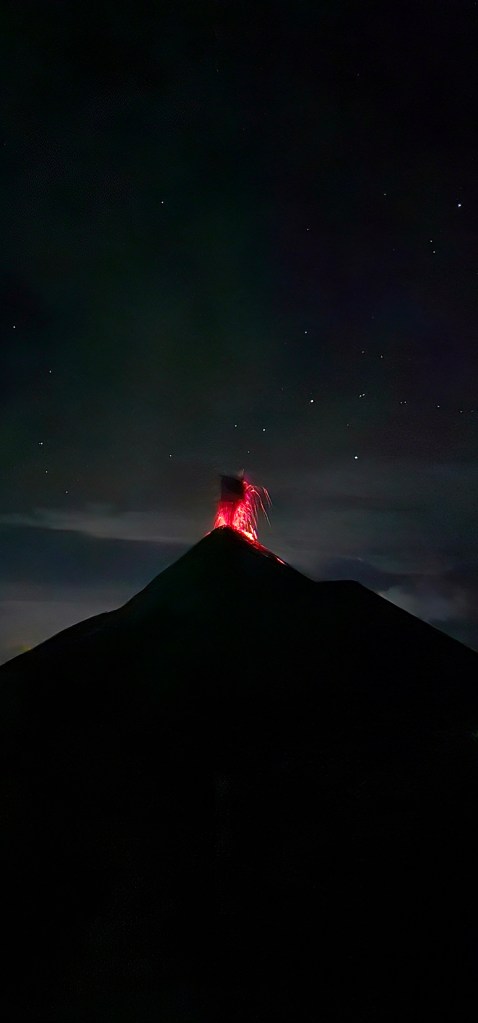
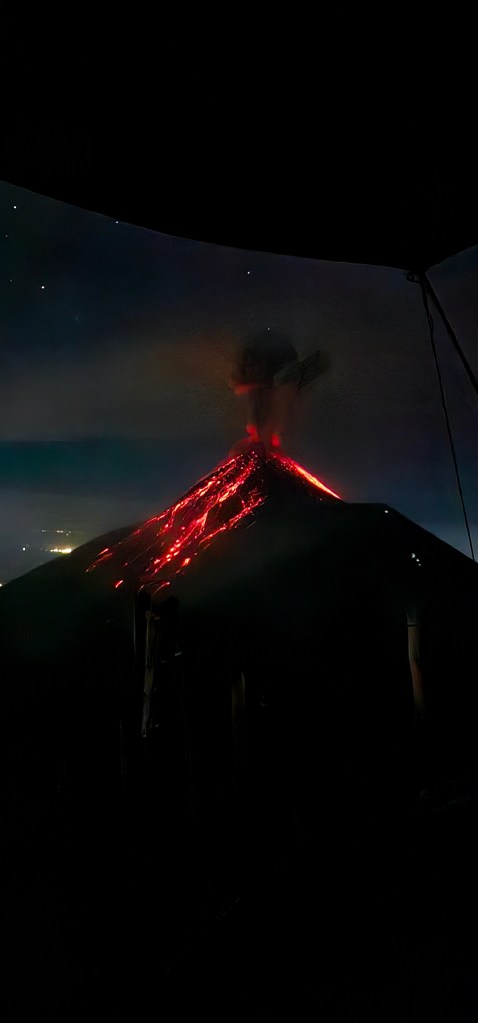
But as night fell, the magic began. Every 15–20 minutes, the volcano roared, spewing molten lava into the sky.
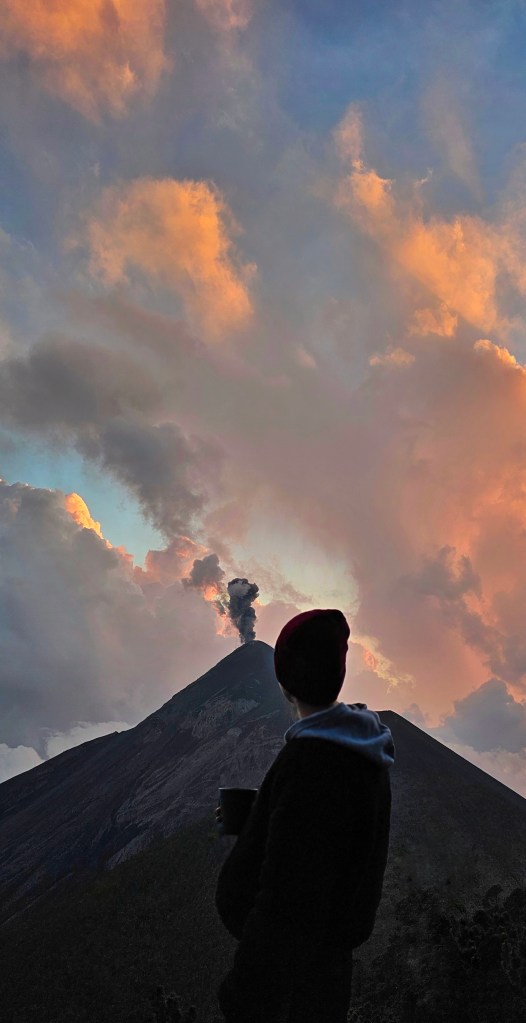
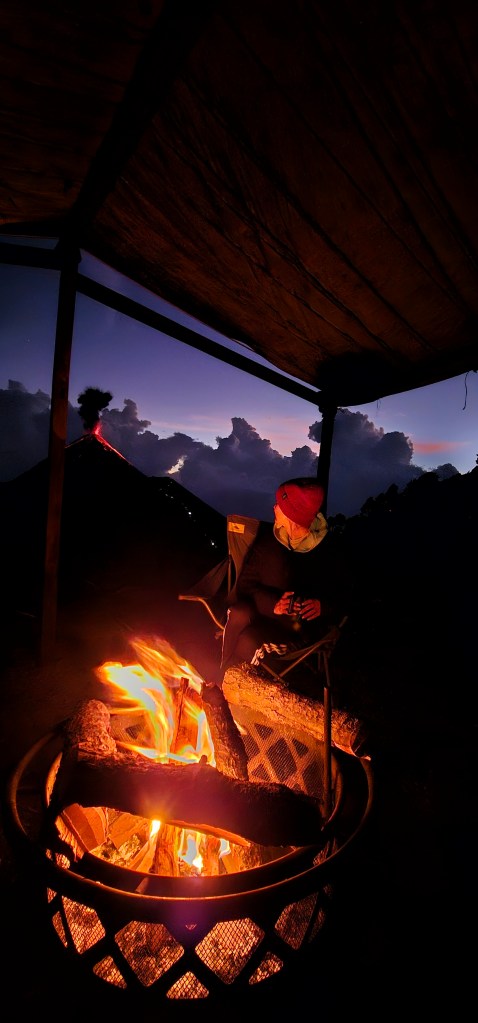
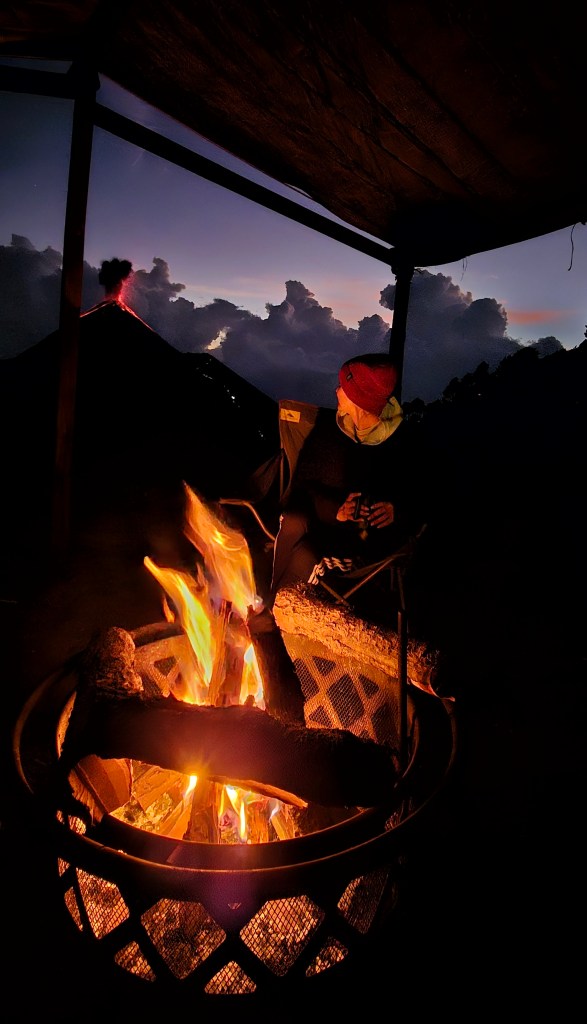
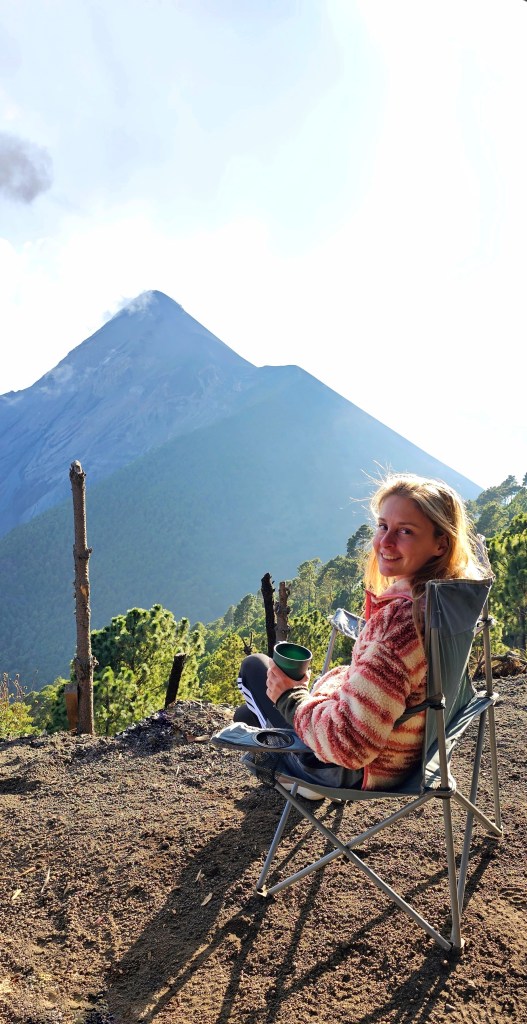
Fuego’s eruptions continued throughout the night. I couldn’t sleep because of altitude sickness, so I took my sleeping bag, unzipped the door of my tent, and spent the night watching the eruptions. It felt like an adventure in itself, despite the discomfort, as the eruptions lit up the night sky. Watching Fuego at night is a humbling experience. It’s like the universe is showing off, reminding you how small you are in the grand scheme of things. This feeling for me is one of the most amazing and humbling thoughts, it makes me appreciate more the experiences I’m lucky enough to have.
How to Experience This Adventure Yourself
- Choose Your Timing Carefully: Check the weather forecast. Tropical storms like Sara can obscure views for days. November to April is generally the best season for clear skies.
- Prepare for the Cold: Despite Guatemala’s warm climate, nights on Acatenango can be freezing. Bring thermal layers and a good sleeping bag.
- Pack Smart: Bring plenty of water, snacks, and a rain jacket, even in dry season. Headlamps are essential for nighttime trekking.
- Choose a Guided Tour with good reviews:
Many companies in Antigua offer guided hikes, providing meals, tents, and expert knowledge. They also prioritize safety in case of volcanic activity. - Acclimate to the Altitude:
Spend a day or two in Antigua before the hike to adjust to the altitude. This will make the climb easier. - Take It Slow:
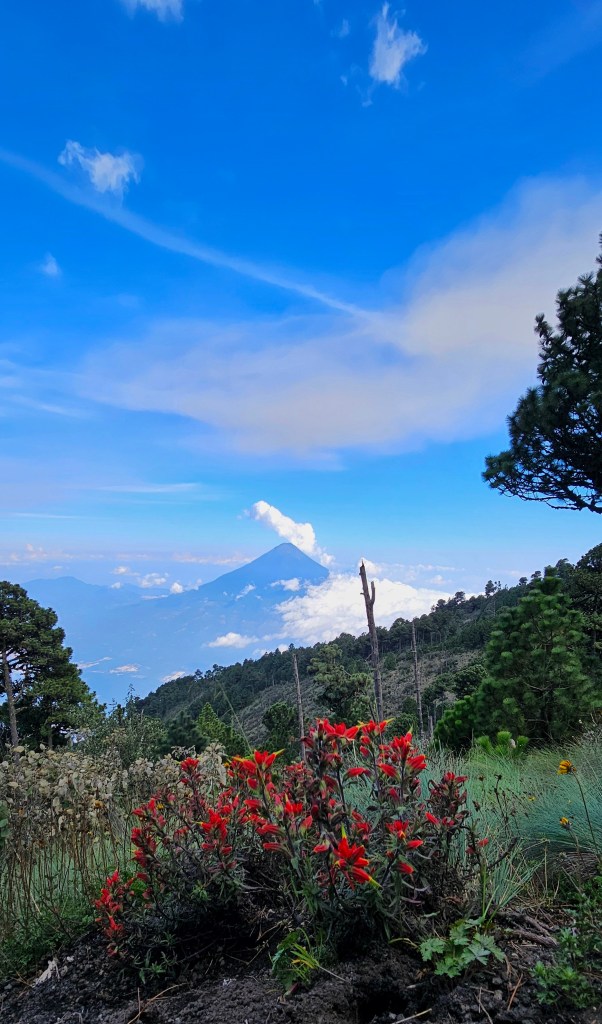
The climb is steep and challenging, but it’s not a race. Enjoy the changing scenery, from farmland to cloud forest to volcanic rock.

Challenging but unforgettable this is the kind of adventure that makes you feel alive. If you’re up for the climb, the cold, and the altitude, the rewards are well worth it. The Acatenango trek isn’t for the faint-hearted, but that’s the point. By the end, you’re not just tired; you’re exhilarated, with a story to tell that no one will fully understand unless they’ve been there themselves. And honestly, that’s part of the charm.

 The Nomadic Vision
Leave a comment