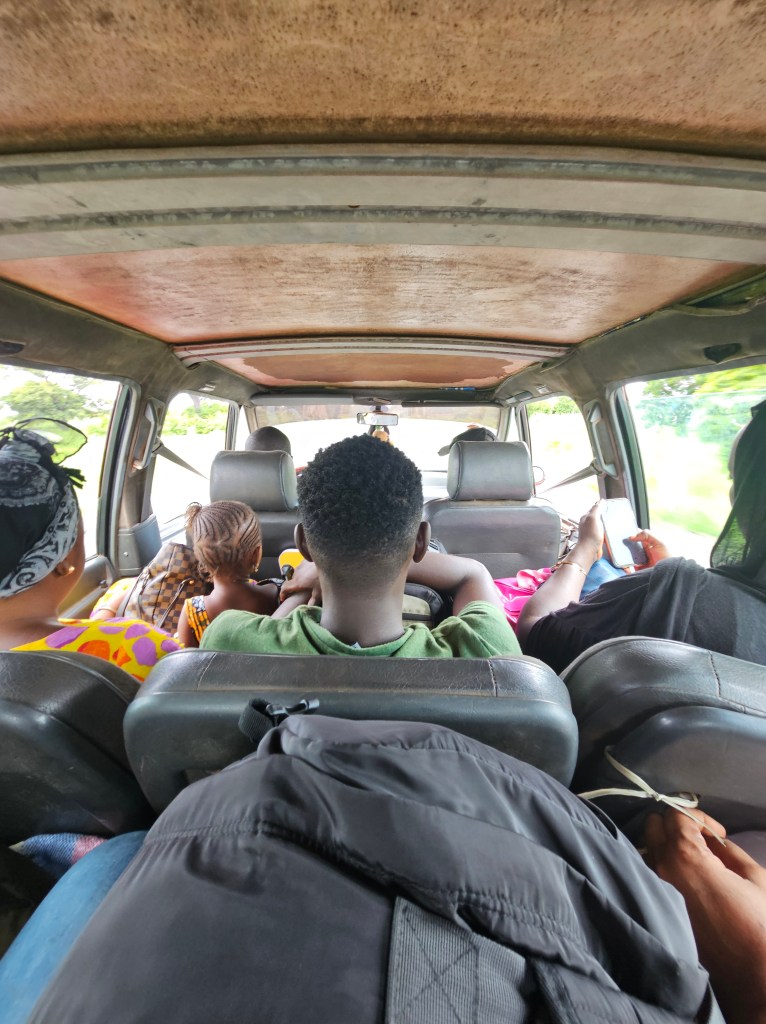
Travelling from Senegal to Gambia by land was more than just a border crossing. It was a lesson in patience, connection, and trusting the process. As a solo female traveller using only public transport, I experienced the kindness of strangers and the quiet thrill of doing something many people find intimidating. And all that with not speaking any French apart from basic phrases I learned before starting the trip. Mercy and a smile gets you a long way.
Why I Chose to Go Overland
Flying would have been easier. But I wanted the adventure. I wanted to move slowly and meet the people who live in the places most travellers skip. Overland travel gives you stories that planes never can.

My Route
I started early in the morning in Saly and reached Banjul, the capital of Gambia, in the late afternoon. It took me about 9 hours door to door, with some waiting between rides
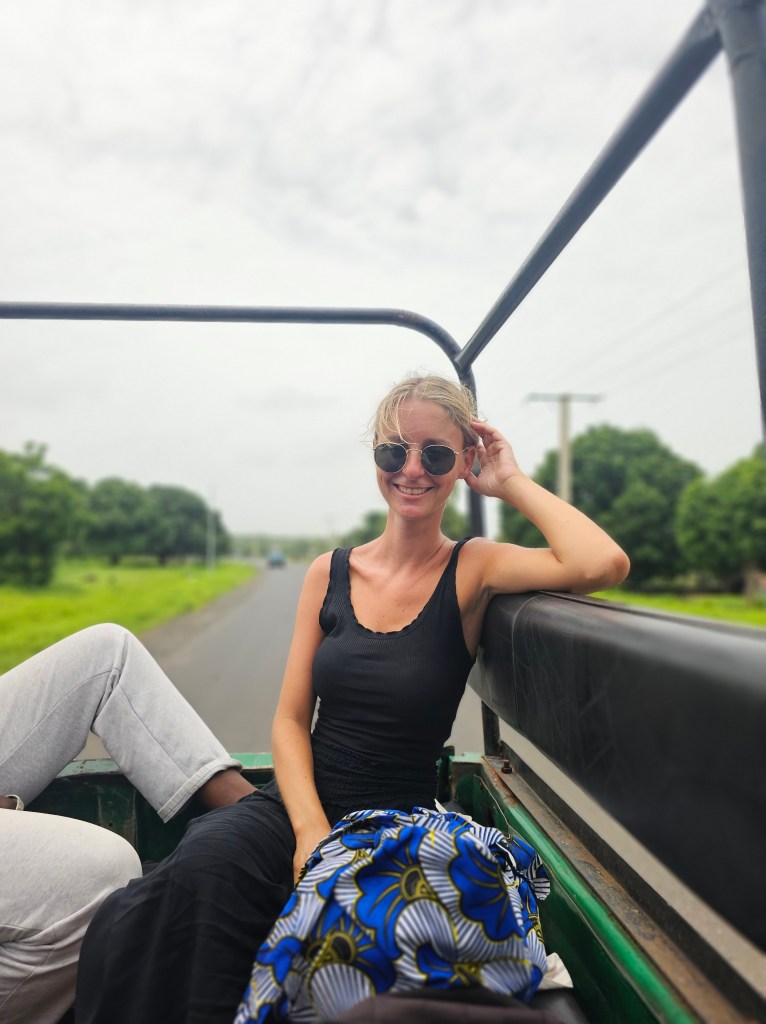
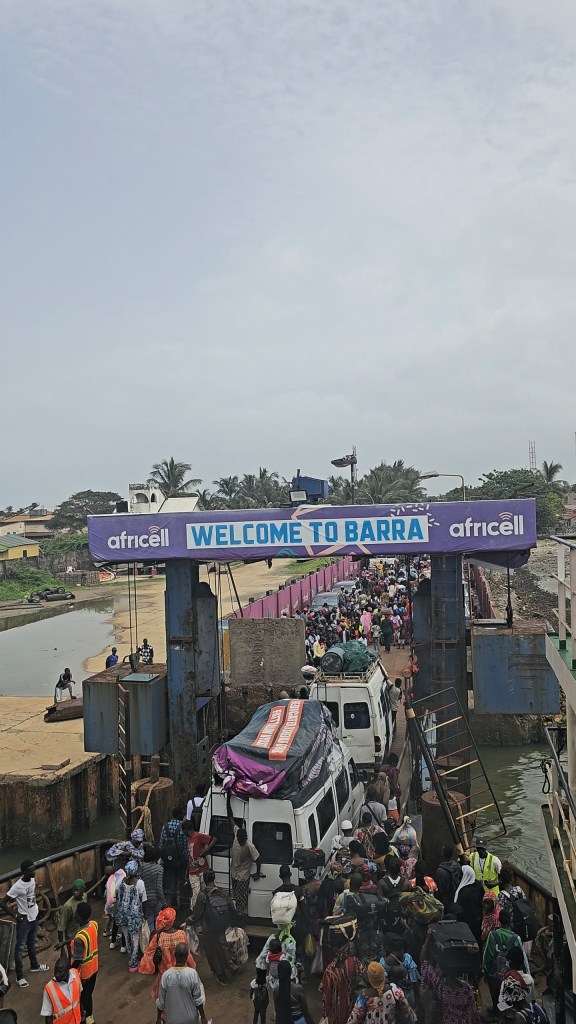
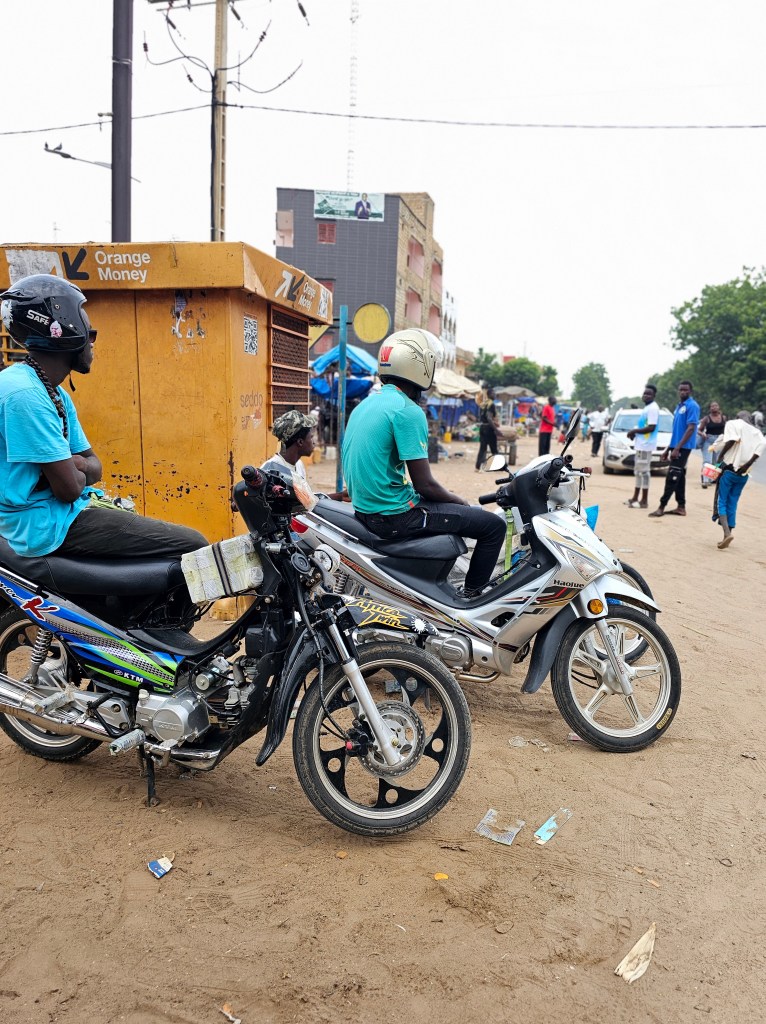
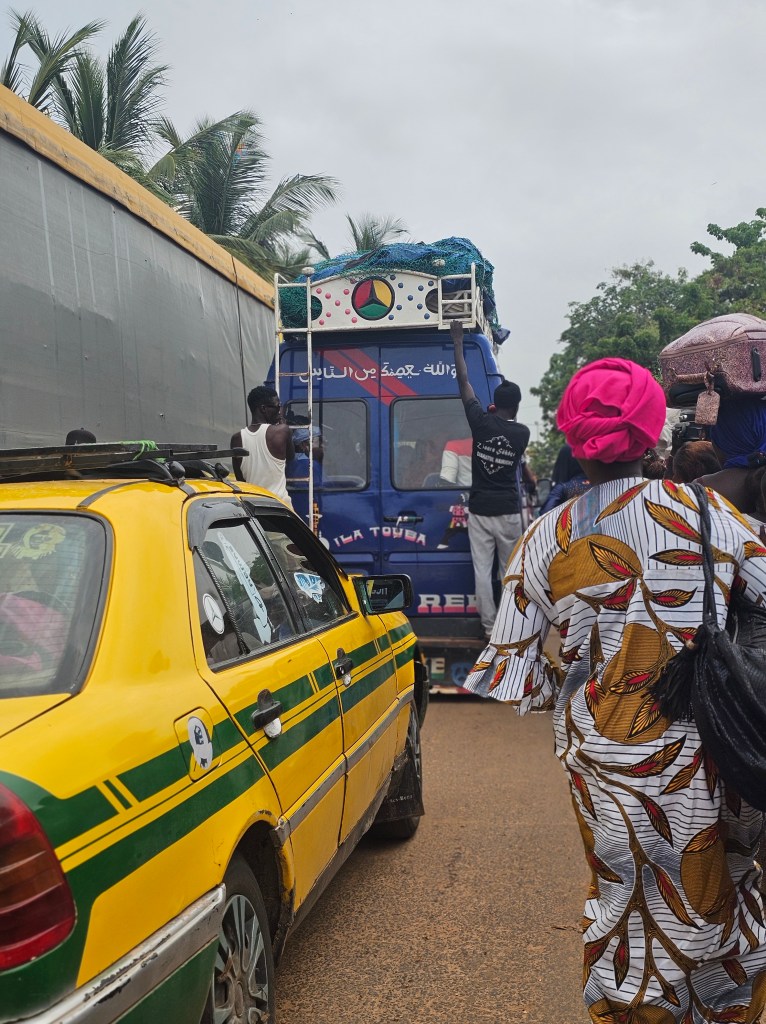
I started in Saly and travelled to Kaolack in a shared car called a sept-place. From Kaolack, I took another shared vehicle to the Karang border. After crossing on foot, I found a taxi to Barra and then took the ferry across the Gambia River to reach Banjul.
Each part of the journey had its surprises. Delays. Quick chats with strangers. Shouting drivers. Laughter. Dust. Humanity. And somehow, it all worked.
What Is a Shared Taxi?
In Senegal and Gambia, public transport is mostly made up of shared taxis (also called sept-places when they’re old Peugeots with seven seats). You pay for one seat and travel with locals who are going in the same direction. The vehicle doesn’t leave until it’s full.
It’s not luxurious, but it works. These taxis connect most towns and villages, and they’re cheap and relatively fast once they get going.
How I Navigated the System
Every town has a “garage”, a local station where shared taxis depart for different routes. It’s usually a dusty open lot with men calling out destinations. In Saly, I found the garage by asking around and just showed up early.
From there, I followed a simple routine:
I greeted the driver or someone nearby with “Bonjour”
I said the name of the next town I needed to reach (for example, “Kaolack”)
I pointed to my phone calculator and asked them to write the price
I memorized the word “prix” and confirmed how much I needed to pay before getting in
That’s all it took. No fancy French. No long negotiations. Just showing that I respected the system.
The Border Crossing
The Senegalese officer smiled when he saw my Croatian passport. He made a comment about Luka Modrić, and after a short friendly chat, he stamped me through. On the Gambian side, I was also treated kindly. They asked a few questions and welcomed me in.
Make sure to have:
• Your yellow fever certificate
• A printed copy of your visa or visa-on-arrival details (if applicable)
• Cash in both CFA and Gambian dalasi OR small change in Euros/Dollars to exchange on the border. Reaserch exchange rate so you eont get much lower rate.
• Patience. Time is a relative thing in West Africa.
This process can take time. Smile. Stay calm. Ask questions if needed. Most people are helpful.
Safety as a Solo Woman
I felt safe during the entire journey. That said, I stayed alert and followed some basic rules:
• Dress modestly. Loose clothes that cover your knees and shoulders are appreciated.
• Do not flash valuables. Keep your phone and money tucked away.
• Trust your gut. If something feels off, move away without hesitation.
• Travel during daylight when possible.
• Let someone know your route and estimated arrival time.
I met people who looked out for me simply because I was respectful and open. Being kind and clear goes a long way.
Talking to Locals
Learning a few words in French and Wolof helped me so much. A simple “Bonjour” or “Salaam aleikum” can shift the energy immediately.
People are often curious. They may ask where you are from, why you are traveling alone, or whether you are married. These questions are rarely meant to offend. They are part of how people connect.
If someone makes you uncomfortable, just smile, nod, and walk away. Most conversations are warm and harmless.
Practical Tips
• Ask for the price before getting into any shared taxi.
• Travel early in the day to avoid missing connections.
• Sit in the front seat if possible. It is more comfortable.
• Bring snacks and water. Delays are normal.
• Always carry small change.
• Use a local SIM card with mobile data so you can check locations and use Google Translate if needed.
Final Thoughts
Arriving in Banjul after this long journey gave me a deep sense of pride. I had done it on my own. No private transfers. No shortcuts. Just shared taxi’s, boats, borders, and belief.
Travelling overland between countries in West Africa can seem complicated from the outside. But with preparation, humility, and openness, it becomes something unforgettable.
Let me know if you want a breakdown of costs, a transport map, or a packing checklist for this route. I’m happy to share.
Read more…
A glimpse into life at a Gambian fishing village
A Chaotic and Colourful Journey Through Senegal: From Kaolack to Toubacouta and Beyond
 The Nomadic Vision
Leave a comment